

REVIEW · MARBELLA TOURS
Marbella: Sightseeing Walking Tour
Marbella has layers, and this walk connects them fast. In about 90 minutes, you get an expert local guide to show you how Moorish fortifications, Castilian churches, and modern touches all live side by side in the Old Town. I love that it is focused, not rushed, so you can actually process what you see instead of just collecting photos.
Two things I really like: first, the tour explains the town’s religious heritage in a way that feels understandable, not like a lecture. Second, the stops around Salvador Dali’s statues add a playful twist to a route that could otherwise be all stone-and-seriousness.
One drawback to plan for: entrance to monuments is not included, so if you want to go inside major sights, you may need extra time (or pay separately on the day). Also, the tour runs only when there are at least four participants, so check dates before you lock in the rest of your schedule.
Key moments you will remember

- Orange Square as your orientation hub, with cafes and historic facades that make the Old Town feel real
- Churches and the Cathedral area, explained through Marbella’s changing history
- Remnants tied to the Moorish Castle and the Alcazabar, so you see where power once stood
- Castilian buildings from the Modern Age, with context that turns walls into stories
- Dali statues on the walking route, quirky, photogenic, and surprisingly fitting
More on the Marbella side of the coast
- From Marbella: Guadalmina River Guided Canyoning Adventure★ 4.9 · 1,486 reviews
- Marbella: Sailing & Dolphin Watching with Snacks and Drinks★ 4.7 · 1,062 reviews
- Authentic Andalusia – Jeep Eco Tour (pick up from Marbella – Estepona)★ 5.0 · 564 reviews
- Marbella: Puerto Banús Boat Rental with No License Needed★ 4.9 · 286 reviews
A 90-minute walk that connects Old Town Marbella’s timeline

This is the kind of walking tour that works because it is short on purpose. You cover the heart of Marbella without dragging you across the coastline, which matters when your time is limited and the sun can do its own thing in Andalusia.
What makes it especially good value is that it focuses on meaning. Instead of treating landmarks like a checklist, the guide ties them to why they exist, who built them, and what changed when different cultures took over the town. You end up with a mental map, not just a set of snapshots.
And yes, you will still see the obvious hits, like Orange Square and the main religious buildings. But the tour is more satisfying because it adds the in-between details that help you read the streets as a timeline.
Starting at Parque de la Alameda, then walking into the historic core
Your tour begins at one of two starting points: Parque de la Alameda (Alameda Park) is one option. The second start depends on what you book, and the meeting point can vary, so I suggest double-checking the exact location confirmation message.
The early minutes are about getting your bearings. Starting from a park gives you a calmer start before the Old Town tightens into narrow streets and shaded corners. You can also pace yourself right away, since comfortable shoes matter more here than you might expect.
In practical terms, this is a “feet first” experience. There is no waiting for a bus, and you do not need special gear. Just show up, walk with the group, and let the guide point out what you would otherwise miss.
Orange Square: where Marbella social life meets architecture

Orange Square is the main stage of the tour for a reason. It is central, it is atmospheric, and it functions like a natural meeting point for the town’s everyday rhythm, with cafes and shops pulling people in from all directions.
What I like about this stop is how it grounds the history. You are not just staring at an old facade. You are watching a living square while the guide explains the layers around it, including the religious side of the town and how older structures shaped public life.
If you want to get more out of this moment, do it like this: pause at the square just long enough to notice angles. Look for where streets funnel toward the center, then listen as the guide connects that shape to how the town grew. That is when the square stops feeling generic and starts feeling like a key.
Other walks through Marbella on foot

Churches and the Cathedral area: religious heritage made human

Marbella’s religious heritage can feel intimidating if you only look at it from the outside. This tour helps because the guide talks about the buildings as evidence of changing eras and identities, not just as pretty stops.
You will spend time around the town’s major churches, including the Cathedral area, and you will get context for why these religious landmarks sit where they do. The main point is not trivia. It is understanding that in Marbella, faith buildings were also community anchors, major visual markers, and symbols of power.
This is also one of those stops where I think a guide really earns their fee. You leave with a better sense of what you are looking at: architectural style signals, local naming, and how the town’s story shifted over time.
If you are the type who normally rushes past churches, slow down for this section. Even if you do not go inside, you will read the facade differently when you understand what the guide is pointing to.
Moorish Castle remnants and the Alcazabar: power you can still feel

One of the tour’s strongest themes is Marbella’s Moorish past. You will see remnants of the Moorish Castle, and you will also encounter the Alcazabar, which gives the story more weight than a quick photo stop.
This is one of those experiences where the guide turns partial remains into something coherent. Instead of treating ruins like random stones, the talk gives you a framework for how fortifications worked and why the town’s geography mattered.
Practical value here: even if you have never studied Andalusian history, you will still understand the big idea. The Moors shaped street patterns and defensive thinking, and you can see echoes of it in where the older sections sit and how the Old Town wraps around them.
A consideration: because these are remnants and exterior views, your experience will depend on your attention. If you are only chasing indoor ticket attractions, you might find this part less visually dramatic than full monuments. But if you like reading the city like a story, this section is a highlight.
Castilian buildings from the Modern Age: the town grows up

After the Moorish chapter, the tour shifts toward Castilian buildings from the Modern Age. This part matters because Marbella did not freeze after the Reconquista. The town kept developing, and the built environment changed again as new cultural and political priorities took over.
I like the way this segment is handled. It does not pretend that one era erased another. Instead, it shows you how Marbella layered styles and functions over time, which is exactly what makes the town feel distinct on the ground.
As you walk, you will see how the architecture signals different periods and tastes. The guide’s role is to connect those visual cues to the broader story, so you understand what you are looking at without needing a textbook.
For many people, this is where the tour stops feeling like sightseeing and starts feeling like place understanding. You will glance up at a facade later that day and recognize what you learned. That is the payoff.
Salvador Dali statues: surreal pauses in a real Spanish town

Then comes the fun part. The walking route includes Dali’s Statues, and this is where the tour balances weight with curiosity.
Dali is surrealist, but the statues themselves feel oddly practical in the setting. They give you a pause where you stop thinking like an architecture student and start thinking like a visitor who is allowed to enjoy weird art.
In one experience, the guide helped people appreciate the statues as part of Marbella’s modern cultural identity, not as random street decor. That is what makes this stop work: it fits the overall theme of the tour, which is layers.
If you like photography, this section can be great. If you do not, it is still worth it because the guide usually frames what you are seeing so it makes sense, even when you do not get every artistic reference.
What the guide does that makes this tour worth it

This walk is led by a live local guide with languages including Spanish, English, French, German, and Italian. That language coverage matters because it keeps the explanations detailed rather than watered down for mixed groups.
One review highlighted how guide Eduardo brought real passion and knowledge. Another mentioned that the guide shared history and local customs and even pointed people toward places to taste typical food. That fits the overall style of the tour: not just facts, but context you can use right away.
So here is my practical advice. Listen for the “why.” When the guide explains what a landmark meant for the community, take that in. Later, when you are walking independently, you will notice patterns you would have missed, like why certain streets feel positioned around key buildings.
Group size, pace, and how to get the most out of 90 minutes
The tour is 90 minutes, which means it moves at a comfortable walking pace but still leaves you enough time to absorb details. You do not want to arrive with heavy plans like a second tour immediately afterward. Build in some slack, especially if you want to browse cafes around Orange Square after.
You should also know there is a minimum of four participants. That is not unusual, but it does mean some dates might be limited if you are traveling outside peak season.
If you prefer quieter attention, private group options are available. That is a good choice if you have mobility needs beyond basic wheelchair access, if you travel with kids, or if your group wants more back-and-forth time.
Wheelchair access and footwear: the small stuff that matters
The tour is wheelchair accessible, which is a huge plus for a walking tour in an older town. Still, do not assume every street corner will feel effortless. Old Town areas often involve uneven surfaces and turns.
Bring comfortable shoes. I know that sounds like the standard travel advice you hear everywhere, but here it is genuinely important. You are on foot for about an hour and a half, and the tour is built around you noticing details up close, which means you cannot just shuffle along in fragile sandals.
Also bring comfortable clothes. Marbella can be warm, and you will be walking under open sky parts of the route.
Price and value: why $29 can work well here
At $29 per person, this is a budget-friendly way to get guided context in the center of Marbella. The real value comes from what is included: a live tourist guide. In a town like this, guide explanations are often what separate “I saw it” from “I understood it.”
Entrance to monuments is not included, so you should treat the price as covering guided walking and interpretation, not admission tickets. If you want a fully ticketed day, you may need to add spending for specific sites you choose to enter.
That said, you still get a lot even from outside views. Moorish and Castilian remnants plus Orange Square, churches, and Dali statues create a satisfying arc across different eras. For many visitors, that is the best use of a short timeframe.
In other words, if you want the story quickly and economically, this tour fits. If you want hours of museum time or a lot of indoor access, you may need a different plan alongside it.
Who should book, and who might want a different option
This tour is a strong match if you:
- Want an orientation to Marbella’s Old Town in 90 minutes
- Like understanding history through the places themselves, especially Moorish and Castilian influences
- Enjoy a mix of major landmarks and quirky stops like Dali’s Statues
- Prefer a small, human-scale walking experience over hopping in and out of buses
It might not be the best fit if you:
- Plan to spend a lot of time inside monuments during your visit
- Need a slower, fully stop-and-stare pace for long photo sessions
- Want a tour that is purely about views and beaches, since this one is focused on landmarks in the town center
Good news: even then, the Orange Square and religious heritage parts usually reward people who come mainly for the “big name” spots, as long as you stay engaged.
Should you book the Marbella sightseeing walking tour?
I would book it if you want a smart first look at Marbella. The route hits the landmarks that matter, and the guide helps you connect them into a clear story instead of a random sequence of sights.
If you like social squares, church architecture, Moorish fortification vibes, and modern surprises like Dali statues, you will probably enjoy this a lot. And because it is $29 for a guided walk, it is easy to justify when you compare it to the cost of missing out on a guide-led explanation.
Just plan with one thing in mind: entrances are not included. If going inside key monuments matters to you, check what you want to do after the walk so you do not end up wishing you had more time.
FAQ
How long is the Marbella sightseeing walking tour?
The tour lasts 90 minutes.
How much does the tour cost per person?
The price is $29 per person.
Where is the meeting point?
The meeting point may vary depending on the option you book. One starting location option is Parque de la Alameda (Alameda Park).
What languages are available for the live guide?
The live tour guide is available in Spanish, English, French, German, and Italian.
Is the tour wheelchair accessible?
Yes, the tour is wheelchair accessible.
Is there a minimum number of participants?
Yes. A minimum of four participants is required for the tour to operate.
Are entrance fees to monuments included?
No. Entrance to monuments is not included.
Can I cancel for a full refund?
Yes. You can cancel up to 24 hours in advance for a full refund.
More Tours in Marbella






More Tour Reviews in Marbella


The Marbella End of the Coast



Fresh on the Marbella list


Marbella Tours, compared.
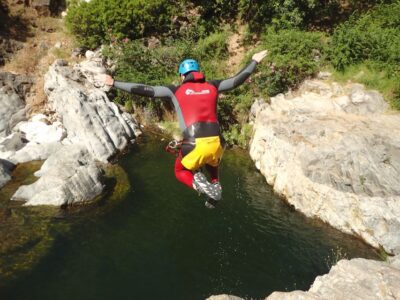 ★ 4.9From Marbella: Guadalmina River Guided Canyoning AdventureFrom $471,486 reviews
 ★ 4.7Marbella: Sailing & Dolphin Watching with Snacks and DrinksFrom $711,062 reviews
 ★ 5.0From Marbella: Canyoning Tour in Guadalmina CanyonFrom $54778 reviews
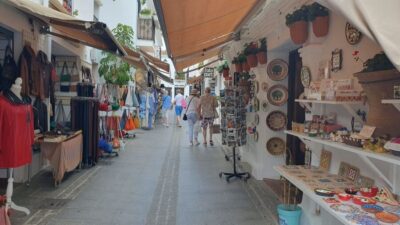 ★ 4.5Marbella, Mijas y Puerto Banús Guided TourFrom $58686 reviews
 ★ 4.5From Malaga or Costa del Sol: Mijas, Marbella & Puerto BanusFrom $45677 reviews
 ★ 4.8Marbella: Sunset Sailing Trip with Drinks and SnacksFrom $71586 reviews
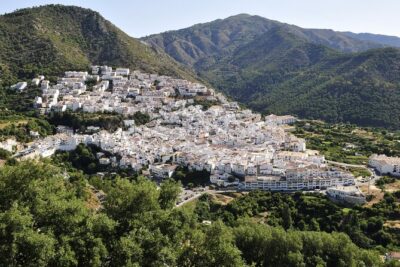 ★ 5.0Authentic Andalusia – Jeep Eco Tour (pick up from Marbella – Estepona)From $139564 reviews
 ★ 4.6From Marbella: Private and Group Sailboat Cruise & DrinksFrom $56316 reviews
Browse the lists this tour appears in