
REVIEW · ESTEPONA TOURS
From Estepona: Vía Ferrata de Casares guided climbing tour
High above Casares, you cross monkey bridges. I love the monkey bridges and the 360 views that keep widening as you climb, even when the route gets spicy. One possible drawback: the main riding time can feel shorter than you expect if you’re picturing a long full day.
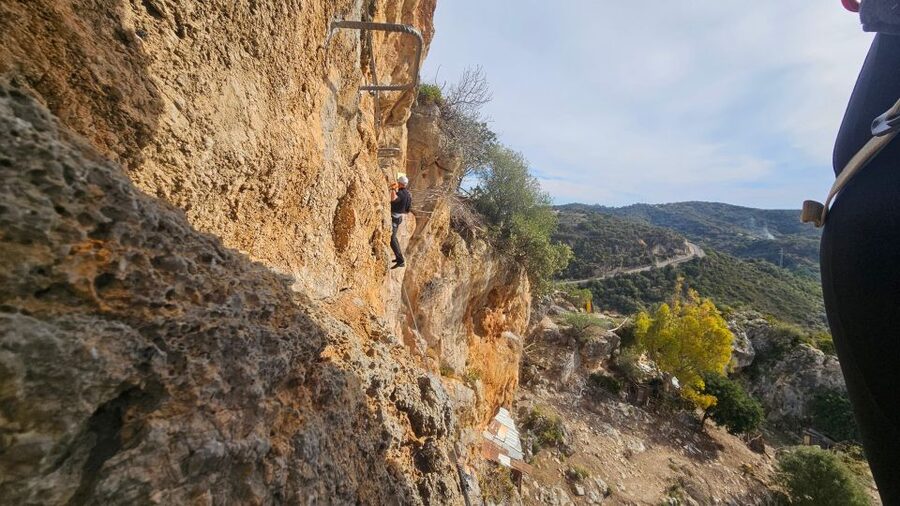
This guided climb is built for an intermediate mindset, not beginners who want a stroll. It follows a K3 aerial course called La Plana, gaining about 45 meters over roughly 100 meters of cable and rock, with a route that ends up at the old Casares Castle.
Key points you will actually feel in your body
- K3 aerial via ferrata (La Plana) with a 45 meter ascent in just 100 meters of route
- Two monkey bridges (25 meters and 12 meters), high above the ground
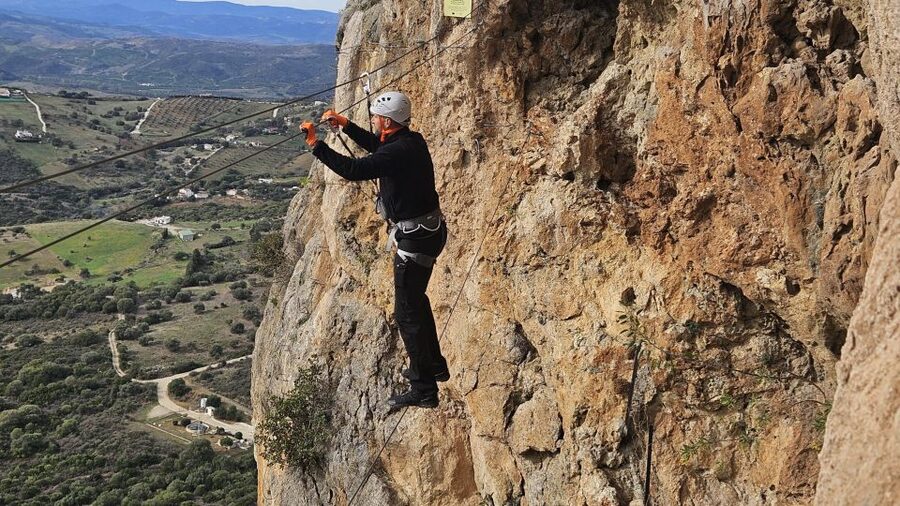
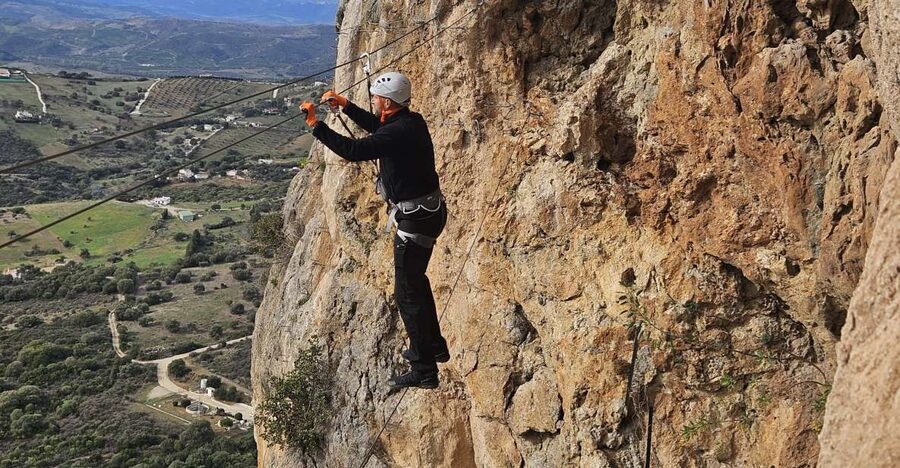
- Two overhang sections that test your technique, not just bravery
- Views all the way through over the Strait of Gibraltar, Sierra Bermeja, and the Malaga coast
- Small group size up to 10 with a guide, gear, and insurance included
Other ways to fill a day in Estepona
- Estepona: Dolphins Searching Sea Cruise with Drink & Snacks★ 4.7 · 645 reviews
- Estepona: Dolphin Watching Sailboat Cruise with Drink★ 4.7 · 488 reviews
- From Estepona: Guadalmina River Guided Canyoning Adventure★ 4.9 · 209 reviews
- Estepona: Dolphin Search Boat Trip with Drink and Snacks★ 4.7 · 144 reviews
Via Ferrata de Casares: An adrenaline climb with a view payoff
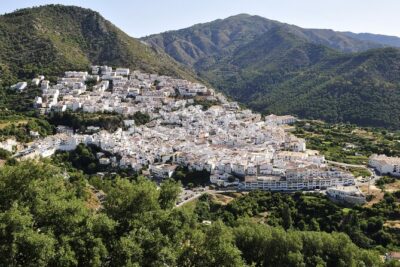
If you want the kind of experience where the scenery helps you keep going, Via Ferrata de Casares delivers. You start climbing around town, then the route gradually reveals more of the Strait of Gibraltar, Sierra Bermeja, and the Malaga coast as you go. By the time you’re up near the old Casares Castle, you’re not just tired, you feel like you earned the panorama.
What I like most is that it’s not only about speed or strength. The route forces you to move with control: clip in, balance, breathe, and trust your guide’s instructions. You get a real sense of progression, from the first tricky wire section to crossing those long monkey bridges.
The other big win is location. Casares is a hill town, so the via ferrata naturally has height and openness built in. That means your head for heights matters, but the reward is immediate and constant, not saved for the last five minutes.
The route basics: K3, 45 meters up, and La Plana’s aerial feel
La Plana is listed as level K3, and it’s described as very aerial. Translation: expect exposure and open air around you while you’re moving along fixed cables and wires. The numbers also help set expectations. You ascend about 45 meters total height along a route length of about 100 meters.
This is not a long hike with a little climbing. It is a compact, technical feeling course, which is part of why the timing works well for people who still want a morning or afternoon with other plans. You get movement, elevation, and challenges in a short window.
You’ll also face specific features that change the “vibe” of the climb:
- Monkey bridges in two lengths (25 m and 12 m)
- Two overhangs
- Sections that involve a combination of wires and rappel-style movement, guided by your instructor
In the tour’s difficulty breakdown, you’ll see a strength (2), psychological (2), resistance (2), and land (2) rating. You don’t need to be a rock climber to do K3, but you do need to be comfortable with effort, technique, and being off the ground for stretches.
Your 2-hour plan in plain steps
The full experience is about 2 hours, which is a sweet spot. You get enough time for proper safety briefing and gear fitting, then for the full climb, without turning the day into a long endurance project.
Here’s what the flow feels like, conceptually:
- Meet up and get equipped
Your guide meets you at the address indicated. The activity includes all technical material, plus insurance. You’ll still want to show up with the right footwear and sports clothing, because that’s what keeps you comfortable while you’re clipping and moving.
- Safety briefing and technique basics
Expect instructions on how to use the harness and clipping system, how to handle each section, and what to do when you feel uncertainty. In the reviews, the guides are praised for explaining clearly and keeping the group calm during harder moments.
- Start the climb along the ferrata route
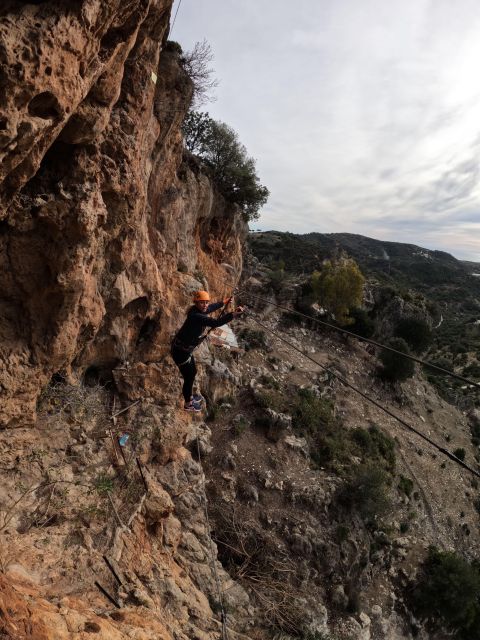
You’ll ascend roughly 45 meters across about 100 meters of route. The action includes aerial cable walking, wires, and segments that challenge you to keep your balance.
- Cross the monkey bridges and negotiate overhangs
These are the moments that feel the most “wow” and the most technical, because you’re combining breath control with careful foot placement.
- Finish at the highest point, near Casares Castle
The route ends at the top area of town, where the old Casares Castle sits. It’s a strong ending, because you land in the place that naturally makes sense for those views.
Small-group setup matters here. The group size is limited to 10 participants, which usually means less waiting and more attention from the guide when you need a nudge.
A few more guided options in Estepona
Monkey bridges and overhangs: where your nerves meet your technique
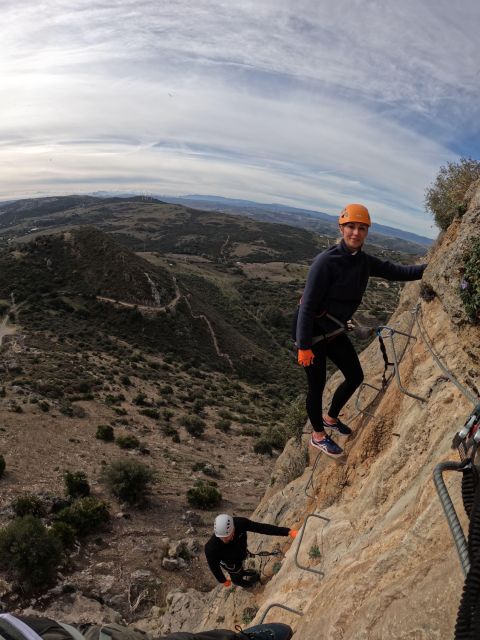
Let’s talk about the parts you’ll remember on the drive back to Estepona. The tour includes two monkey bridges: one about 25 meters long and a second about 12 meters long. Both are crossed high above the ground, and that vertical exposure is what turns this from a simple climbing lesson into an actual test of balance and calm.
Monkey bridges can feel more mental than physical. Your legs will do their job, but your mind will decide whether you’re steady or fidgety. This is where a good guide makes a difference. One of the clearest reviews highlights that Nico, the monitor, explained everything in a way that made people feel safe, and stayed calm even when moments got difficult.
Then come two overhang sections. Overhangs are where technique gets more important than raw strength. You’ll likely be thinking about where your hands go, how your feet grip, and how to keep your body close enough to make each move feel controlled. If you’ve never done this style of movement before, don’t worry. The tour is designed as an intermediate K3 course with guided support.
If you want a practical approach: go slow on purpose. Slow is not weakness here. Slow is what helps you keep clipped correctly, place your feet with confidence, and not rush the hard part.
The views over the Strait: why the climb feels worth it
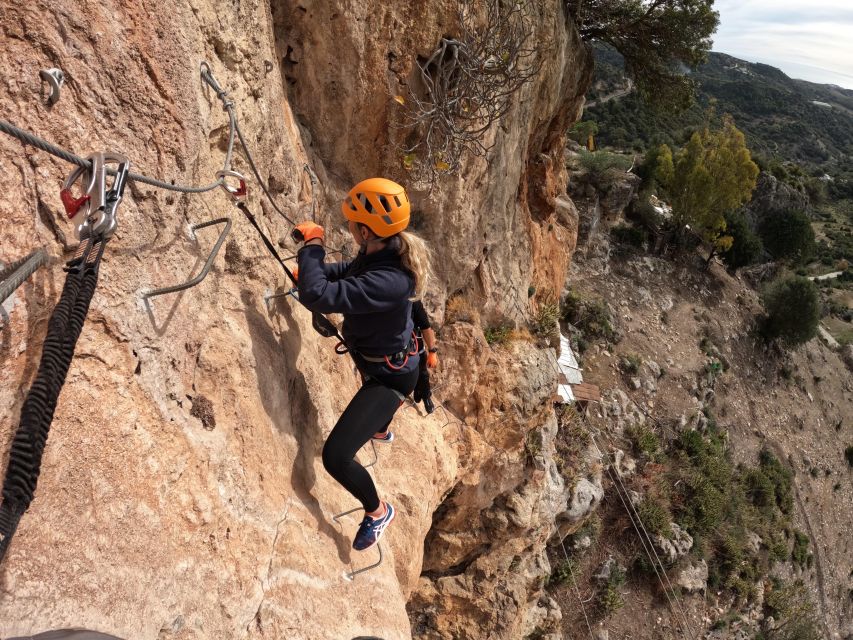
You don’t just get a view at the end. The route orientation and location are described as delivering scenery throughout. You’ll get views over the Strait of Gibraltar, Sierra Bermeja, and the Malaga coast as you move along the ferrata.
That matters more than it sounds. When you’re in the air on cables, your brain can either lock onto fear or it can focus on something external. In a good aerial route, the scenery becomes a tool. It gives you something to look at besides your own feet and the drop below.
Finishing near the old Casares Castle adds another layer. It’s not only a historic-looking endpoint. It’s the highest point of town, so you feel like you’ve reached a natural viewpoint. The old castle area is also described as surrounded by birds of prey, which can make the final stage feel especially alive, even if you’re tired.
If you enjoy photography, you’ll likely want to pause your camera instinct during the hardest sections and save it for the smoother stretches. Safety and balance first, pictures second, always.
Fitness and head for heights: who this tour suits
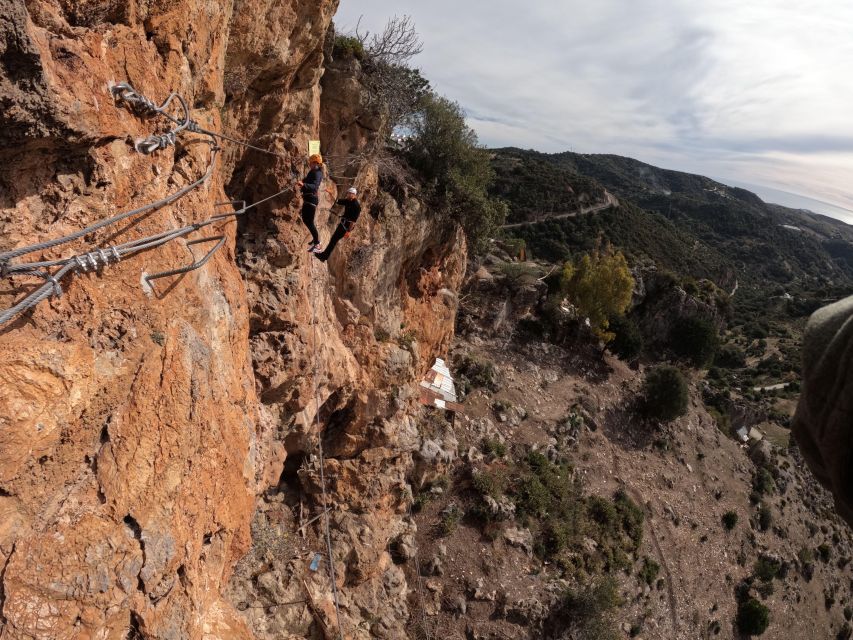
This via ferrata is recommended for active people who practice sports regularly. If you’re currently doing a bit of walking and maybe some basic gym work, you’ll probably be in the right neighborhood. If you’re mostly sedentary, you’ll likely feel it, not just in your muscles, but in your overall confidence.
Vertigo is the main deal-breaker. The activity is specifically not recommended for people with vertigo. That’s not a surprise. You’re crossing aerial features, including long monkey bridges, and you’re constantly dealing with the feeling of being above open space.
It also has clear restrictions:
- Not suitable for children under 16
- Not suitable for pregnant women
- Not suitable for people with altitude sickness
If you fit those categories, it’s best to choose a different style of experience in the area. If you don’t, you still want to be honest with yourself about how you handle heights. The K3 rating includes psychological difficulty (2), which is a way of saying you should be prepared to be challenged mentally, not just physically.
A good rule: if you can’t comfortably stand on a high balcony and look down, this route is probably not your friend.
Price and value: what $47 includes and why it matters
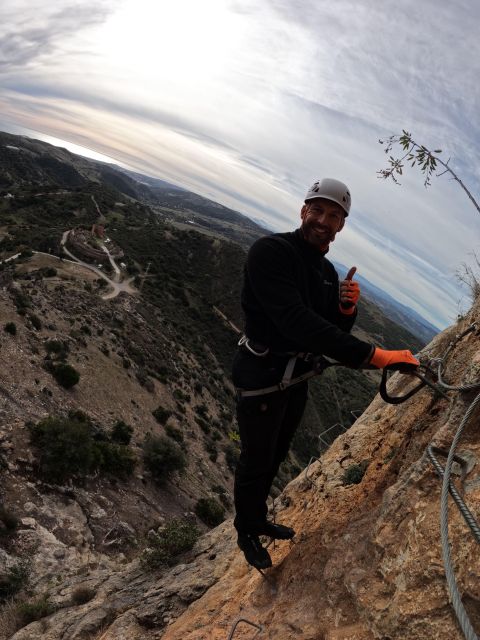
At $47 per person, this sounds almost too approachable for a guided aerial climbing experience. The reason it works is what’s included.
You get:
- A guide
- All technical material
- Insurance
- Snacks and drinks
- Video footage and photos
That bundle is the real value story. You are paying for safety systems, trained instruction, and the gear you would not want to source or test on your own. The snacks and drinks also matter, because they help you recover enough to enjoy the rest of your day, not just survive the drive.
The video footage and photos can be a practical add-on too. Monkey bridges and overhangs are the kinds of moments you can feel too busy to document while you’re doing them. Having that captured means you can relive the route without needing to multitask.
One small “consideration” that shows up in feedback is timing expectations. A review mentioned expecting longer than about 45 minutes, though the overall activity is 2 hours. My take: treat the 2 hours as the full block including briefing and setup, then expect the actual climbing to be intense and relatively compact.
What to bring, wear, and avoid
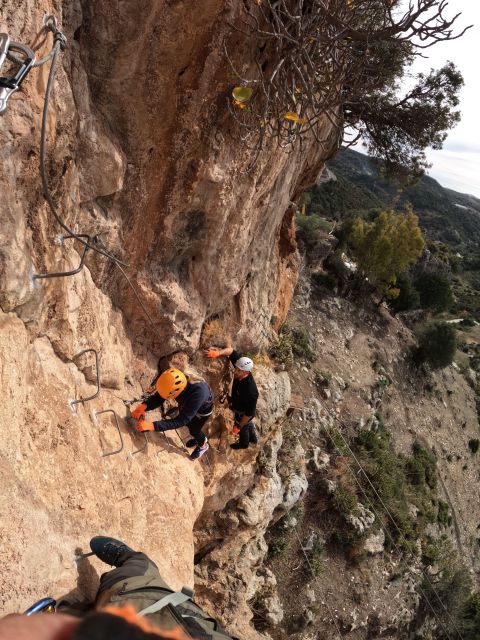
This is a simple list, and following it helps you feel smoother from minute one.
Bring:
- Sports shoes
- Sportswear
The tour rules also note:
- No alcohol and drugs
That seems obvious, but it’s worth repeating because ferratas punish sloppy choices. Your coordination matters, your grip matters, and your judgement matters when you’re clipped in but still moving through exposed sections.
If you’re deciding between shoe types, prioritize grip and comfort. You want something that can handle textured rock and cable work without slipping.
Also, wear sports clothing you can move in. If your outfit restricts your range of motion, you’ll feel it during technique-heavy moments like overhangs and bridge crossings.
Should you book the Via Ferrata de Casares guided climb?
Book it if you want an intermediate via ferrata with real aerial features, long views, and a guided team that keeps things calm when it gets tricky. This is especially a good fit if you’re active, comfortable with heights, and curious about how Casares looks from above, ending near the old castle.
Skip it if you have vertigo, low physical condition, or you fall into the stated not-suitable groups. Also skip if heights already feel like a panic trigger. With K3, your head matters as much as your legs.
And if you’re on the fence about whether it will be worth it, consider this: you’re paying for guide support, equipment, insurance, snacks, and even your route memories via video and photos. For a short, focused 2-hour experience, that’s strong value.
FAQ
How long is the Via Ferrata de Casares guided tour?
The activity lasts about 2 hours.
Where do I meet the guide?
You meet at the address indicated by the provider. Your guide will be waiting for you at the meeting point.
What is the route like on the Casares via ferrata?
It is a K3 aerial via ferrata called La Plana. You ascend about 45 meters in height over about 100 meters in length, cross two monkey bridges (25 meters and 12 meters), and do two overhang sections. The route ends at the highest point of Casares near the old Casares Castle.
What is included in the price, and what should I bring?
The tour includes a guide, all technical material, insurance, snacks and drinks, plus video footage and photos. Bring sports shoes and sportswear.
Who should not do this activity?
It is not suitable for children under 16, pregnant women, or people with altitude sickness. It is also not recommended for people with low physical condition or for anyone who suffers from vertigo.
What languages does the instructor speak, and how flexible is cancellation?
The instructor speaks Spanish, English, and French. Free cancellation is available up to 24 hours in advance for a full refund.
More Tours in Estepona

More Tour Reviews in Estepona


A Day in Estepona
Fresh on the Estepona list
Estepona Tours, compared.
 ★ 4.7Estepona: Dolphins Searching Sea Cruise with Drink & SnacksFrom $41645 reviews
 ★ 4.5Dolphin Watching Adventure in Estepona BayFrom $42626 reviews
 ★ 5.0Authentic Andalusia – Jeep Eco Tour (pick up from Marbella – Estepona)From $139564 reviews
 ★ 4.7Estepona: Dolphin Watching Sailboat Cruise with DrinkFrom $41488 reviews
 ★ 4.5Estepona: Andalusian Flamenco Show Entry Ticket with DrinkFrom $53236 reviews
 ★ 4.9From Estepona: Guadalmina River Guided Canyoning AdventureFrom $46209 reviews
 ★ 5.02 h Estepona Bay TourFrom $45179 reviews
 ★ 4.7Estepona: Dolphin Search Boat Trip with Drink and SnacksFrom $44144 reviews
Browse the lists this tour appears in