
REVIEW · RONDA TOURS
Private visit to Ronda 2 hours
Ronda hits different with a local guide. In just 2 hours, you get a focused walk through Ronda’s best viewpoints, starting in town and finishing right beside the New Bridge.
What I like most is the way the route strings together big-picture views with smart, small stops. The Alameda del Tajo gardens (200 years old) set the tone early, and the Jardines de Cuenca viewpoint is made for that postcard shot of the bridge over the gorge. You also get bullring storytelling that names real-life figures like Orson Welles and Ernest Hemingway.
The only real catch is time. Ten to fifteen minutes per stop can feel quick, and one key site on the route, Palacio de Salvatierra, is not included in the price if you want to go inside.
Key highlights I’d bank on
- Alameda del Tajo for early, garden-lined viewpoints with 200 years of history behind them
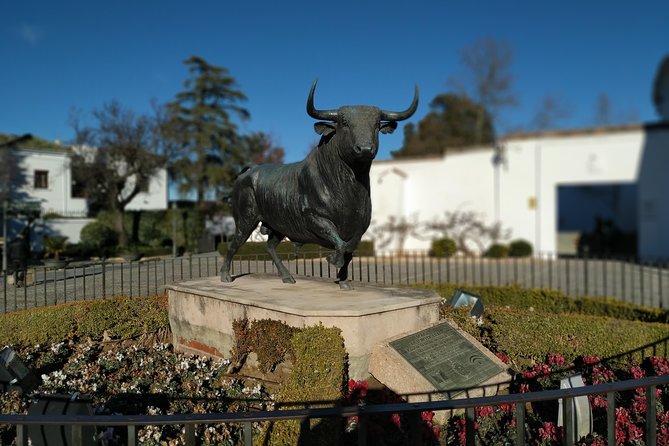
- Plaza de Toros de Ronda for bullfighting stories tied to Orson Welles and Ernest Hemingway
- New Bridge from multiple angles, so you actually see why it became Ronda’s symbol
- Jardines de Cuenca for the iconic bridge-in-the-gorge photo setup
- Ending at Mirador de Aldehuela right by the New Bridge, with Old Bridge views too
- Private group experience (up to 15 people) in English, with a mobile ticket
More runs up into the sierra
- From Málaga: Ronda+Setenil de las Bodegas with Little Train★ 4.6 · 4,115 reviews
- From Malaga: Ronda and Setenil Guided Tour Day Trip★ 4.5 · 3,072 reviews
- From Malaga: Ronda and Setenil de las Bodegas Day Trip★ 4.6 · 1,552 reviews
- From Malaga: Ronda & Setenil de las Bodegas Guided Day Trip★ 4.7 · 600 reviews
Private 2-hour loop: the best way to see Ronda without burning a day
Ronda is compact, but it still takes time to get your bearings. This private visit is built for people who want the highlights, with a guide keeping you moving and making sense of what you’re seeing.
You’re paying for a private group visit that can include up to 15 people, which is a big deal for value. At $300.40 per group, the cost per person drops a lot if you’re traveling with others. Even if you’re a smaller group, you’re buying time and guidance, not just “a route.”
The timing is also realistic: about 2 hours. That means you’re not trapped in a long schedule if you’d rather spend your extra time eating, wandering, or staying for sunset photos. One practical benefit: you get a mobile ticket, and the tour is offered in English.
You start at Pl. de la Merced, 1 and end at Mirador de Aldehuela (C. Armiñán, 1), finishing next to the New Bridge. That last detail matters more than it sounds, because you don’t have to fight your way back through the center once you’ve seen the main views.
If you like a tight plan with quick stops and photo moments, this works well. If you want long museum time or long indoor visits, you’ll likely feel the clock.
Alameda del Tajo: 200-year gardens and your first big viewpoints
The tour begins at Alameda del Tajo, described as the most beautiful park in Ronda, with gardens that are 200 years old. Even if you’re not a “garden person,” this stop is useful because it gives you an immediate sense of Ronda’s geography.
From the viewpoints, you get those classic gorge-and-town sightlines, the kind that help your brain lock the layout in place. That means later stops make more sense. When you see the New Bridge again and again from different angles, you’ll understand what you’re looking at and why it’s so dramatic.
Time is short here, around 10 minutes, and that’s enough to take in the views and get a first round of photos without turning it into a half-day walk. Admission is listed as free, so you can treat it like a “welcome to Ronda” orientation stop.
Practical note: since it’s a park with viewpoints, you’ll want to move at a pace that lets you stop for angles. A good guide will help you pick where to stand so you don’t end up with the bridge and buildings half blocked by bad sight lines.
Plaza de Toros de Ronda: bullring stories with names you actually recognize
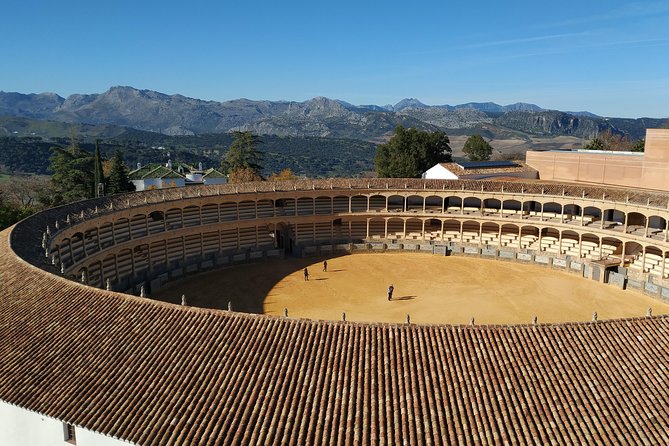
Next comes Plaza de Toros de Ronda, set in the surroundings of Spain’s oldest bullring. The focus isn’t just architecture. You’ll hear the story of modern bullfighting, and you’ll also connect Ronda to big cultural names, including Orson Welles and Ernest Hemingway.
This is one of the stops where a guide makes the difference between seeing a building and understanding why it matters. A bullring can feel like a single sight from the outside, but the context turns it into a window on how Ronda fits into broader Spanish history and culture.
The tour stop itself is quick (about 10 minutes) and admission is listed as free. But here’s a high-value extra tip drawn from strong guide feedback: after your main walk, I’d add time to go into the bullring museum section and watch the very short movie. It’s the kind of small add-on that makes the whole bullring story click.
If you’re sensitive to the topic, you can still enjoy the architecture and the historical context. Just know the conversation may include bullfighting references because the bullring is central to Ronda’s identity.
The same trips, run privately


New Bridge (Puente Nuevo): why 1793 still dominates the photos
Then you hit the heart of the town, New Bridge, completed in 1793. This is the symbol stop, and it’s not treated as one quick glance. You’ll observe it from several different angles, which is exactly how you should experience it.
At about 10 minutes, it’s short, but it’s not random. Multiple angles help you see how the bridge frames the gorge, how the town sits above and around it, and why photographers always want “one more angle” before leaving.
This is where your guide’s job is hardest and most helpful. If you just arrive on your own, you might walk straight past the best photo positions. With a guide, you get pointed to viewpoints that make the bridge look strong instead of messy.
Also, if you wear or carry something reflective, check your phone screen brightness before filming. The contrast around the gorge can fool camera exposure settings, especially if the light is shifting.
Jardines de Cuenca: the hanging-gardens photo setup
After New Bridge, the next stop is Jardines de Cuenca, the hanging gardens that give you one of Ronda’s most sought-after images: the New Bridge tucked into the gorge.
This part is usually where you slow down, because it’s not just pretty. It’s designed for views, and it gives you a natural framing device. You also get connected context from what’s mentioned on the route, including the House of the Moorish King and the Old Bridge.
The planned time is about 15 minutes, with admission listed as free. That extra time compared to some other stops matters, because gardens take a little longer. You pause, you find the shot, you check the angle again, and you still have time to move on without feeling rushed.
If you care about photos, this is the stop to prioritize. I’d treat it as your main “bridge photo” moment, then do the quick check shots later at the Miradors.
Arco de Felipe V and Iglesia corners: picture frames and baroque color
Ronda has a knack for making small details feel theatrical, and this tour leans into that.
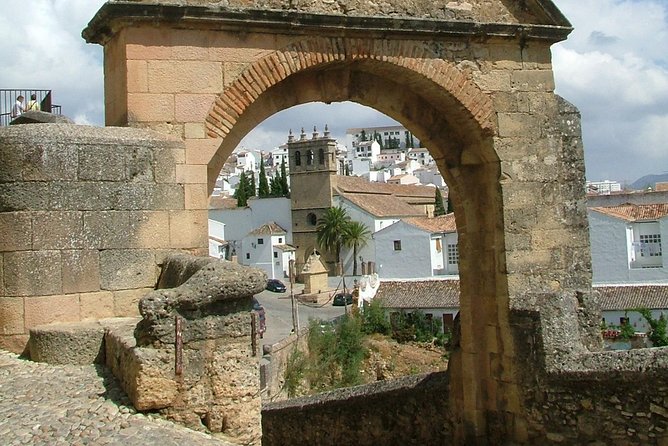
First is Arco de Felipe V, described as the entrance through the Old Bridge, featuring a doorway built in the 16th century. Crossing an arch is more than a dramatic walk-through. It sets your eye up like a camera frame. You’ll have the opportunity to photograph the Church of Father Jesus framed by the arch, which is the kind of “I didn’t expect that” moment that makes a route feel special.
Then you move on toward Iglesia de Nuestra Señora de La Paz. This church is singled out for its colorful facade and baroque decoration inside. It’s a small corner, but it’s the sort of contrast that keeps Ronda from feeling like only stone viewpoints. After you’ve been staring at gorge lines, baroque detail is a welcome change.
Expect about 10 minutes at these stops, with admission listed as free for both.
If you’re short on time, these are also the spots where you can decide how much to go inside. The tour doesn’t demand it, but the framing and interior style are the types of things you’ll remember.
Palacio de Salvatierra and Plaza Duquesa de Parcent: power, monuments, and layers
Two stops in the middle of the walk shift the focus from views to evidence of how important Ronda was.
Palacio de Salvatierra is known for its 18th century facade, described as the most beautiful in Ronda. The details matter here: the forge, the wooden cover, the noble shield, and colonial elements are all mentioned as part of why the building reflects Ronda’s historical importance. This is a quick stop at about 5 minutes.
One practical note: admission for this stop is not included. If you want to go in, you’ll need to pay separately or decide on a quick exterior-only look. Even if you skip the interior, the facade details are worth a careful stare, especially if you like architecture.
Then you reach Plaza Duquesa de Parcent, called the most important square in Ronda. This isn’t just “a plaza.” It’s presented as a place where major archaeological remains have been found. You also get the religious side of the story, with three Catholic churches referenced, plus standout buildings like the City Hall and Iglesia de Santa María de la Encarnación.
This stop runs about 10 minutes, with free admission listed.
If you’re wondering what to do in plazas on a short tour, this is the answer: pause in the center long enough to orient, then look for the vertical landmarks. Plazas in Ronda often work like open-air maps.
El Campillo viewpoint and Mirador de Aldehuela: the best finale by the New Bridge
The last stretch is where the tour cashes in on Ronda’s drama.
First, Plaza de María Auxiliadora, known as El Campillo. From its viewpoint, you can see a wide sweep in the distance, including Sierra de Grazalema, Hoya del Tajo, and the Archaeological Site of Acinipo. The gardens also include two pinsapos, called out as of interest.
This is about 10 minutes, free admission listed.
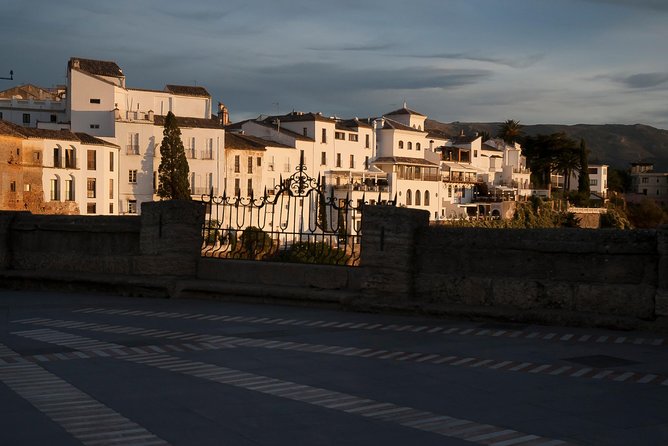
Then you finish at Mirador de Aldehuela, a closing viewpoint stop around 10 minutes. Here, you can see the New Bridge and Old Bridge together, plus the Casa del Rey Moro, and Plaza de España, where the visit ends. The tour finishes right next to the New Bridge, so if you want to linger for photos, you’re not walking away from the best part of the show.
If you’re trying to plan your day, this ending is useful. You can keep exploring from there, or you can head for food without worrying about retracing steps.
Why guides make Ronda feel alive: Marta, Alfredo, and Alberto
This tour is only as good as the person walking you through it. The best thing about the guides connected to this experience is how they turn facts into moments.
I noticed a pattern in the guide feedback around Marta, described as amazing and truly local. Her style comes through as warm and helpful, and she’s specifically recommended the bullring approach, including the museum movie.
There’s also Alfredo, praised for bringing energy and life to Ronda. His approach blends fun and history, and he connects the city to personal memories from childhood. That kind of “you’re here now” storytelling is exactly what makes a short visit stick.
Then there’s Alberto, noted for being very knowledgeable and for a methodical, almost scientific approach to the route and history. His style works if you like structure and clear explanations, especially when a city has layers like Ronda does.
Finally, one review called out language skill, mentioning French that was impeccable. So if you’re comfortable in English and you’re paying for an English-led experience, you’ll still likely get a guide who knows how to explain clearly.
What should you do with this? If your guide asks what you like, steer them toward your interests. If you love architecture, ask about the bridge angles or the palatial facade details. If you like culture, bring up the bullring and what those named figures represented for Ronda.
Price and timing, plus what tickets are free
Here’s the practical math. The price is $300.40 per group, up to 15 people, for about 2 hours. If you have a full group, you’re looking at roughly $20 per person. If it’s just two or four of you, the per-person cost rises, but you’re paying for a private, guided, time-saving walk with multiple built-in stops.
All stops list admission ticket free except Palacio de Salvatierra, where admission is not included. That’s a smart setup. You get a lot of “no extra line, no extra cost” value across the route.
The experience is offered in English, and you get confirmation at booking time and a mobile ticket.
One small planning detail: it’s commonly booked about 114 days in advance on average. That suggests demand is real, especially in popular seasons. If your trip dates are fixed, don’t treat booking like a last-minute task.
Who this private Ronda walk fits best
This experience is a strong match for:
- People with limited time who still want the main sights of Ronda, including the New Bridge and key plazas
- Groups of friends or families who want a private setting rather than joining a large bus crowd
- Anyone who values storytelling as much as seeing buildings and views
- Photo-focused visitors who want guide help picking viewpoints, especially around New Bridge and Jardines de Cuenca
It’s less ideal for:
- People who want long indoor museum time at every stop
- Anyone who needs slow, unstructured wandering, since several stops are intentionally brief
Should you book this private Ronda visit?
Yes, book it if you want a high-yield walk with a real guide, especially if you care about learning what you’re seeing quickly. The route is built around Ronda’s biggest “wow” moments: New Bridge, Jardines de Cuenca, the gorge viewpoints, and the squares that reveal why the town mattered.
I’d book it especially if your group is flexible and you’re open to spending a little extra time after the main loop at the bullring museum movie spot. That one small add-on can make the bullring story feel much more complete.
If you’re the type who wants only one or two stops and then to linger for hours, you might do better with a slower plan. But for most people, this private 2-hour format is a smart use of time and money in Ronda.
FAQ
What is the duration of the private visit to Ronda?
The tour lasts about 2 hours.
What’s the group size and price for this experience?
It’s priced per group at $300.40, and the group size can be up to 15 people.
Where do we meet and where does the tour end?
Meet at Pl. de la Merced, 1, 29400 Ronda. The tour ends at Mirador de Aldehuela, C. Armiñán, 1, and you finish right next to the New Bridge.
Is the tour offered in English?
Yes, it is offered in English.
Are admission tickets included at the stops?
Most stops list admission tickets as free. Palacio de Salvatierra is listed as admission ticket not included.
What is the cancellation policy?
You can cancel for free up to 24 hours in advance for a full refund. If you cancel less than 24 hours before the experience starts, you won’t receive a refund.
The Private Versions


More Tour Reviews in Malaga

Ronda and the Sierra, Keep Looking


Fresh on the Malaga list


Ronda Tours, compared.
 ★ 4.6Ronda+Setenil de las Bodegas with Little TrainFrom $344,115 reviews
 ★ 4.5Ronda and Setenil Guided Tour Day TripFrom $653,072 reviews
 ★ 4.8Ronda and Setenil Tour with Scenic TrainFrom $282,895 reviews
 ★ 4.6Málaga & Costa del Sol: Ronda and Setenil de las BodegasFrom $232,376 reviews
 ★ 4.6Ronda and Setenil de las Bodegas Day TripFrom $291,552 reviews
 ★ 4.7Ronda & Setenil de las Bodegas Guided Day TripFrom $30600 reviews
 ★ 3.9From Costa del Sol: Ronda Village Tour w/ Maestranza TicketFrom $78478 reviews
 ★ 4.5Ronda: Guided Walking Tour with English or Spanish GuideFrom $29423 reviews
Browse the lists this tour appears in