
Malaga gets easier with a guide. This private Essential Malaga walk keeps things efficient, so you spend less time stuck behind a crowd and more time asking questions. You’ll start at Plaza de la Constitución, hit major landmarks, and finish right back where you began.
I especially like the Alcazaba stop with tickets included, and the way the tour is built around real city landmarks you can actually picture later. Guides like Nahuel and Manuel are the kind who explain what you’re seeing, then point out what to notice on your own. One more plus, the pacing works well for a short trip, with each site timed so you’re not exhausted by hour two.
One possible drawback to plan around: parts of the experience are outdoor only, like Malaga Cathedral and the Museo de Malaga finish, so you’re not buying a full museum day.
Key highlights to know before you go
- Private, English-guided group so you can ask questions without competing for attention
- Skip-the-crowd feel built into a tight route through central sights
- Alcazaba entry is included, and it’s the best place in this route for big views
- Teatro Romano de Malaga is a standout, discovered in 1951 and tied to city life in surprising ways
- Outdoor-only cathedral and final Picasso area means you’ll get context, not a full indoor museum visit
More of the city, from the port up to Gibralfaro
- Málaga: Alcazaba and Roman Theatre Guided Tour With Entry★ 4.8 · 5,792 reviews
- From Malaga and Costa del Sol: Gibraltar Tour★ 4.4 · 4,483 reviews
- Malaga: Teatro Flamenco Malaga Live Flamenco Show★ 4.7 · 4,254 reviews
- From Málaga: Ronda+Setenil de las Bodegas with Little Train★ 4.6 · 4,115 reviews
A private Malaga walk that starts at Plaza de la Constitución
This is the kind of tour that helps you get oriented fast. You meet at Plaza de la Constitución in Distrito Centro, and from there you move through the old-core grid at a pace that feels doable even if you only have a couple of hours. It’s offered in English, and it’s set up so you’re with just your group, not mixed into a long line of strangers.
The route is designed around “see it, understand it, move on.” That means you’re not spending your day hunting for explanations. Instead, your guide talks you through what you’re looking at, then you get tips for what to do after the tour.
If you’re the sort of traveler who likes history, you’ll be fine here. If you’re more “I want good photos and local context,” you’ll also get what you want. Either way, the private format matters. It gives you time to ask follow-up questions instead of hearing the same script from a distance.
La Calle Larios: where locals and visitors actually meet
Your first stop is La Calle Larios, one of Malaga’s emblematic streets. You’ll spend about 25 minutes here, and it’s a smart start because it’s the kind of street that instantly tells you what the city feels like at street level.
Your guide uses the street as more than scenery. You’ll get help understanding why it matters as a symbol and a meeting place. It’s also a practical checkpoint. If you’re trying to plan shopping, a coffee stop, or where to wander next, this is a good place to get your bearings without yet committing to one direction.
Malaga Cathedral from the outside: an incomplete story you can read
The next step is Malaga Cathedral, but plan for the fact that it’s outdoor only. Expect around 25 minutes, and your guide explains the history from outside. The key idea is that this is an incomplete cathedral, so the architecture and timeline make more sense when someone walks you through what you’re seeing.
This is where you should decide what kind of visit you want. If you were hoping for full interior access, this tour is not that. But if your goal is to understand how Malaga’s story shaped the building, the outside viewpoint is still worthwhile. You’ll finish the stop with a better sense of why the cathedral looks the way it does, instead of just admiring a facade and guessing.
The same trips, run privately


Alcazaba: 1026 fortress power and the city views
Now we get to the heart of the route: Alcazaba. You’ll spend about 1 hour here, and the tour includes tickets for this stop. Your guide frames it as both a palace fortress and a working administrative center, completed in 1026 AD.
Why this matters for you: Alcazaba isn’t just a place to walk around. It’s a place to understand how power and daily governance connected in the city’s past. You’ll also likely get the kind of perspective people talk about when they say they loved the views of Malaga during the tour. From up here, the city makes more sense, and you can picture where you are for the rest of your stay.
In the reviews, people also highlighted how guides tailored the experience for comfort. If you have mobility concerns, this is a good place to bring them up before you begin, because your guide can pace you and help you plan what to tackle first while you’re still fresh.
Teatro Romano de Malaga: the theater under the city’s timeline
After Alcazaba, you head to the Teatro Romano de Malaga, with about 50 minutes on the site. Tickets are included, and this is one of the most interesting stops on the route because it’s tied to a timeline twist.
This theater dates back to the 1st century, but it wasn’t discovered by local residents until 1951. It sits next to a public library called the House of Culture, so you’re watching the city layer history while still living in the modern present.
Here are the details you’ll care about when you’re actually standing there:
- It has space for almost 1,200 people.
- It wasn’t only for theatrical performances. It also hosted opera.
- It even played a role in public votes or referendums in Malaga’s civic life.
That last point changes how you see a Roman theater. It’s not just art. It’s a stage for decision-making and public communication. And once your guide connects those dots, the stone steps and open space stop feeling generic.
Practical note: 50 minutes at a Roman site adds up. Wear shoes you’re happy to walk in, and keep water in mind even though drinks aren’t part of the tour.
Museo de Malaga area: Pablo Ruiz Picasso context, mostly outdoors
The tour closes at the Museo de Malaga area, with about 20 minutes to wrap up. This portion is described as outdoor only, and the guide uses it as a way to connect Malaga to Pablo Ruiz Picasso. The idea is that this place symbolizes his birth, and you’ll hear details about his life and work as you finish.
This is a good ending if you want the cultural anchor without committing to a full museum visit. You’ll get a sense of why Picasso matters to Malaga, so when you later choose whether to go inside the Picasso Museum, you’ll know what you’re looking for.
One drawback to keep in mind: the Picasso museum itself is not included as part of the standard experience. So if you specifically want indoor time with Picasso artifacts, you’ll likely need a separate plan after this tour.
The 2 vs 3 hour choice: when the upgrade helps
The tour runs 2 to 3 hours (approx.). Many people will be fine with the shorter version because this route is central and tightly connected, with outdoor stops that don’t require long indoor transitions. Still, the company offers an option to upgrade to a longer tour.
So how should you decide? If your day is packed with other plans and you want to hit the essentials, go with the standard time. If you like asking questions, want more time for photos, or think you’ll linger at Alcazaba and Teatro Romano, the longer option can be worth it. It buys breathing room, not a different itinerary.
Price and value: what $120.02 per person is really buying
The price is $120.02 per person. For a private tour, that number can feel high until you break down what you’re getting.
You’re paying for:
- A private guide in English who can answer questions in real time
- Included Alcazaba tickets
- Ticketing coverage at stops that list admissions as included in the experience flow
- A personalized assistance element from an agent meant to keep service quality on track
- A mobile ticket, which reduces friction the day of
Also, it’s worth noticing the tour’s demand. It’s commonly booked about 54 days in advance on average. That’s a sign that people treat this as a smart “early days in Malaga” move. Booking ahead usually helps you secure the time slot you want.
Is it worth it? For me, it becomes a yes if you want a guided route that helps you understand the main sights without turning it into a full-day museum quest. If you only want to stroll and you already know exactly what you’ll see, a self-guided approach could be cheaper. But if you want context fast and you’re traveling with limited time, the private format gives you real value.
Guides who actually tailor the experience, Nahuel and Manuel
Two names come up clearly: Nahuel and Manuel. What stood out in the way they were described is not just that they knew facts. It was that they made the tour easier to enjoy.
Nahuel is specifically credited with adapting to mobility concerns while still delivering detailed historical context. That’s a big deal because comfort often determines whether you get annoyed and rush, or you slow down and learn.
Manuel is described as friendly and local, with a strong sense of how to guide you through the city while also answering questions. People also liked that guides offered thoughts for exploring on their own and even a restaurant recommendation after the tour. That’s practical, not flashy. It helps you turn the tour into a plan for the rest of your day.
One good rule for private tours: bring your preferences. Ask what you care about most, like architecture, civic life, or artists. Then let the guide steer you.
What to do during the tour: ask the questions that pay off
A private guide is best used when you treat it like a Q&A with a local brain, not just a narration track. Here are questions that fit this exact route:
- For La Calle Larios: Which direction should we walk after we’re done here to keep it easy?
- For Malaga Cathedral: What about the unfinished parts is the most important to understand?
- For Alcazaba: What view should we prioritize for photos, and where is best for a calm pause?
- For Teatro Romano: How did Roman civic culture work through spaces like this?
- For the Picasso area: What is the one thing to look for later if we visit indoor Picasso exhibits?
Also, if you have accessibility needs, say so early. The tour is described as allowing service animals, and one guide was praised for accommodating mobility concerns. That’s a hint that responsiveness is part of how this experience works.
Practical tips before you start
A few logistics tips so you’re not scrambling:
- No port pick up is included. Your guide greets you at the meeting point in Plaza de la Constitución.
- Bring a light layer if you go in cooler months. Outdoor stops mean you’ll feel the breeze.
- Plan for outdoor time at Malaga Cathedral and the Museo de Malaga finish. That’s great for taking in the streetscape, but it means you should dress for weather.
- Mobile ticket means you should have your phone charged and ready.
- Expect a compact route with timed stops. That’s good, but it’s not the format for wandering off mid-tour to window-shop.
If you’re traveling with kids, the route can work well because it’s a sequence of clear “here’s what this is, here’s why it matters” moments. If you’re traveling as a couple or solo, the private format still makes sense because you’re not listening through someone else’s headspace.
Should you book this Private Tour of Essential Malaga?
Book it if you want a guided, efficient introduction to Malaga that mixes street life with major sites. The biggest reasons I’d recommend it are the Alcazaba tickets included, the civic and timeline stories you’ll get at Teatro Romano de Malaga, and the fact that the tour is designed to fit into a short window without making you feel rushed.
Pass or reconsider if you were hoping for indoor time at Malaga Cathedral or a full Picasso Museum experience. This tour gives context and an outdoor finish, not a full indoor museum day.
For most people, though, this is an excellent first-stay plan. You get oriented, you learn what you’re looking at, and you finish with a clearer idea of what to do next. If Malaga is one of your only Spanish stops, this helps you make it count.
FAQ
How long is the Private Tour of Essential Malaga?
It’s listed as about 2 to 3 hours.
Where do we meet for the tour?
The meeting point is Plaza de la Constitución, Distrito Centro, Málaga, Spain.
Does the tour include tickets?
Alcazaba tickets are included. The itinerary also indicates admission tickets included for Alcazaba and for the Teatro Romano de Malaga stop, while Malaga Cathedral is outdoor only with admission not included.
Is Malaga Cathedral entrance included?
No. The cathedral stop is outdoor only, and admission tickets for it are not included.
Is the Picasso Museum included?
No. The standard itinerary does not include the Picasso Museum, and the Museo de Malaga portion is described as outdoor only near Picasso’s birthplace context.
What language is the tour offered in?
The tour is offered in English.
Is this tour private or shared?
It’s private. Only your group participates.
Do I need a printed ticket?
No. It includes a mobile ticket.
Is port pick up included?
No. The guide greets you at the meeting point, and port pick up is not included.
Is free cancellation available?
Yes, free cancellation is available up to 24 hours in advance for a full refund.
Can I bring a service animal?
Yes, service animals are allowed.
More Tours in Malaga


More Tour Reviews in Malaga


Malaga, Three More Ways
Fresh on the Malaga list


Málaga Tours, compared.
 ★ 4.8Caminito del Rey Guided Tour with TransportationFrom $6912,183 reviews
 ★ 4.7From Málaga & Costa del Sol: Caminito del Rey Guided TourFrom $677,488 reviews
 ★ 4.8Alcazaba and Roman Theatre Guided Tour With EntryFrom $145,792 reviews
 ★ 4.4Gibraltar TourFrom $384,483 reviews
 ★ 4.7Teatro Flamenco Malaga Live Flamenco ShowFrom $344,254 reviews
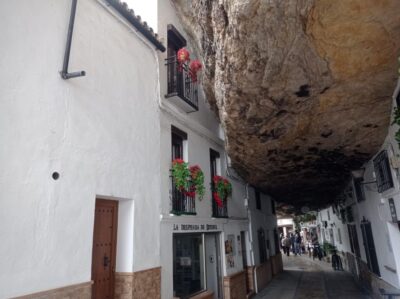 ★ 4.6Ronda+Setenil de las Bodegas with Little TrainFrom $344,115 reviews
 ★ 4.6Full-Day Trip to GibraltarFrom $353,516 reviews
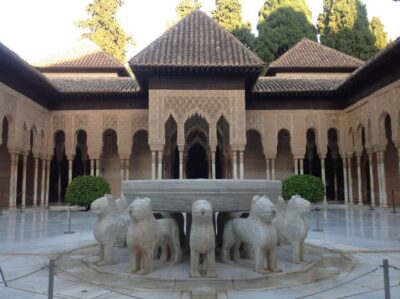 ★ 4.6Granada Full-Day Trip with AlhambraFrom $1283,235 reviews