
REVIEW · LUNCH EXPERIENCES
Muscat Raisin Route – Small group with lunch included
Raisins have a backstory here. This small-group day trip from Malaga follows the Muscat Raisin Route through La Axarquía, with pickup in a Mercedes Vito and real interaction with the people who still make raisins the traditional way. I like the max 8-person group size, and I like that the focus stays on production, not just a quick stop and a photo.
One consideration: you’ll be outdoors in the sun for parts of the walk, and the day includes car time, so come ready with comfortable shoes and take it easy with sun protection and water.
Key reasons this tour works
- Working cortijo visit with a family involved in raisin production, plus a chance to taste what you just learned
- Almáchar’s Museo de la Pasa, taught in a village house setting, so the product feels tied to daily life
- El Borge walking tour in the raisin heartland, followed by lunch in a place with a famous past
- Small group (up to 8), which keeps the pace calm and questions possible
- Lunch included with a vegetarian option available if you ask ahead
Other Malaga bookings on the same list
- Malaga: Sailing Catamaran with Swimming and Paella Lunch★ 4.1 · 578 reviews
- White Villages Tour in the Nerja area: Small-Group Tour and Lunch★ 5.0 · 127 reviews
- Semi-private Tour to Frigiliana and The Lost Village with lunch included★ 5.0 · 52 reviews
- Boat Tour with Snorkeling, Water Slide, Lunch and Pick Up★ 4.5 · 26 reviews
A day built around Muscatel raisins in La Axarquía
This is one of those Andalusian food experiences that treats raisins like they deserve respect. In La Axarquía, Muscatel grapes turn into raisins with a process that is both old and intensely practical. The tour frames it in a bigger picture too: Muscatel raisin cultivation is recognized as a Globally Important Agricultural Heritage System by the FAO, which helps you understand this is not a random snack stop, but an agricultural tradition shaped by geography and work.
What I like best is how the day makes you slow down. You start inland where the production happens, then you move through villages that have built their identity around this crop. By the time you reach El Borge, the raisins stop being a product and start becoming a story about labor, patience, and local pride.
Pickup from Torre del Mar to Nerja, then a calm small-group pace
Your day begins with pickup and drop-off along the coast, from Torre del Mar to Nerja (you can ask for other points). Transport is in a Mercedes Vito van, and the guide also drives, which usually means fewer handoffs and smoother timing. The start time is 9:30 am, so you’re not fighting a late start while other tours are still waking up.
The group is capped at 8, with a minimum of 3. That matters more than it sounds. With fewer people, you tend to get better explanations, more time at each stop, and less rushing when questions come up. Several people also praised the organization and punctual nature of the tour, which is a big deal on a full-day outing.
For comfort, you’ll want to plan for a full day. The day has multiple short walks (including around 30 minutes in Moclinejo), plus driving between villages. If you get carsick easily, bring anti-sickness medication, and if it’s hot out, take the sun seriously. The route is not built around long shaded stops.
Almáchar cortijo: seeing raisin drying the traditional way
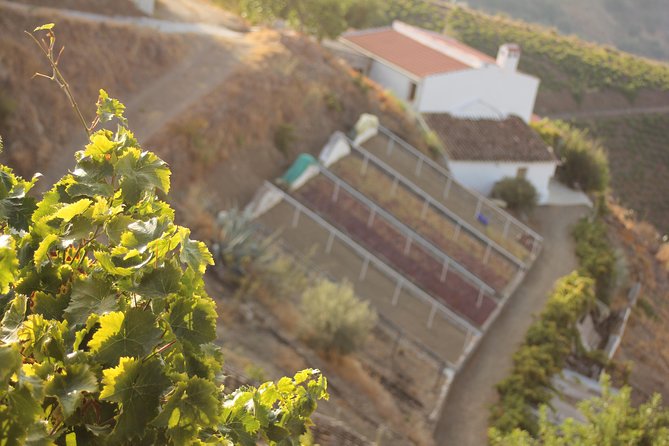
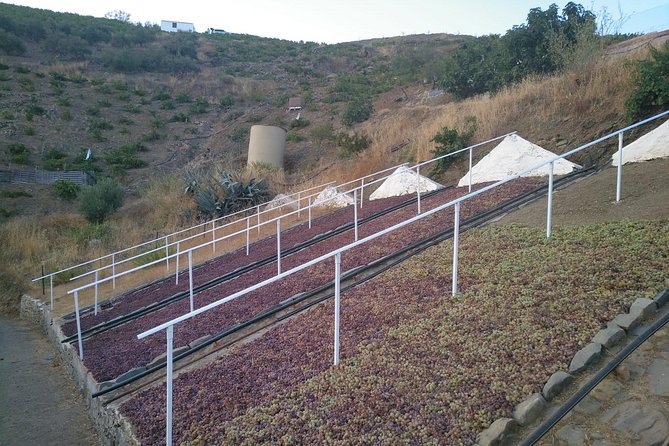
Your first major stop is in Almáchar, at an Andalusian cortijo with views over the inland country. This is where the tour earns its keep, because you see a traditional raisin production system and you meet the people behind it. One highlight from the experience is meeting the family running production, described as Mano and Mari in some visits. That human piece helps the whole process feel real instead of staged.
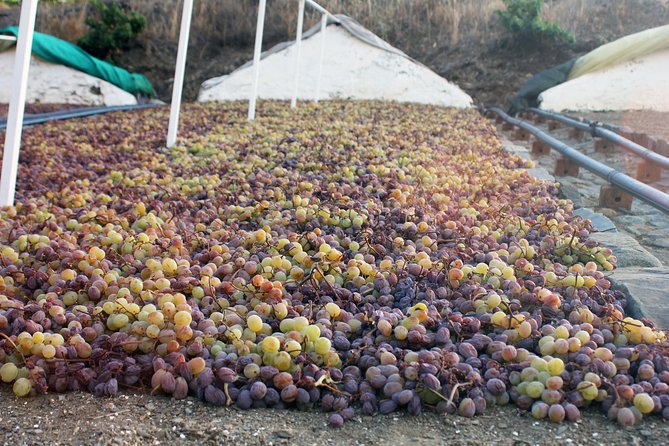
You’ll learn the tools and steps involved, and yes, you’ll try the sweet product. Based on how the production is described, the drying setup can involve toldos paseros, the shaded drying structures used in this region. Whether you’re a raisin fan or not, you’ll probably come away with a new respect for how much work it takes. Raisins are often thought of as a shelf-stable snack. Here, they’re the endpoint of weeks of timing and labor.
What to watch for: the cortijo visit is also the moment the tour turns from “where” to “how.” That’s when you start connecting what you see on the ground with what you later hear in the museums and village walks.

Walking Almáchar and the Museo de la Pasa
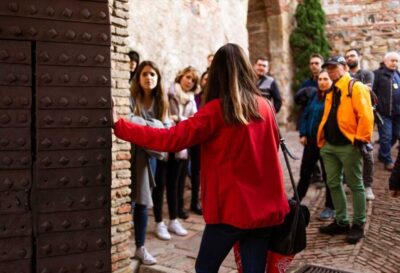
Next comes Almáchar itself, described as the capital of the muscatel grape in the area. This is where you get the village context. You’ll walk the streets and then head to the Museo de la Pasa, the Raisin Museum.
The museum is housed in a typical older house of La Axarquía, so it feels less like a generic display and more like stepping into how people lived with farming at the center. You’ll also see old tools connected to harvesting and raisin preparation, which helps you picture the work before modern shortcuts took over elsewhere.
At this stage, the learning becomes more visual. The museum and village walk pair well: streets and houses show you where the culture lives, and the museum shows you what that culture used to do with its hands. If you like food history that’s practical, this stop hits the sweet spot.
El Borge: raisin heartland, interpretation center, and bandit-era lunch
After Almáchar, you drive to El Borge, positioned as the very heart of the raisin route. The walking tour here is slower and more reflective. You’ll move through the streets with plenty of references to this kind of cultivation, because for this village, raisins aren’t a theme. They’re part of the economic engine and a marker of identity.
Then lunch arrives in a special setting: the Museum of the Bandits. It used to be the house of the bandolero El Bizco from El Borge, and it’s now used as a restaurant. That combo is smart. You’re not eating in a generic place with a view. You’re eating in a building with local legend, which makes the meal feel like another layer of the region’s storytelling.
Lunch is a menu made with local products, and you can request special needs in advance. Vegetarian is available if you flag it during booking. One practical point: drinks are not included, so if you want water beyond what you bring, plan for that.
Time-wise, this part is longer than the others, giving you space to digest and enjoy. If you’re the type who tends to eat fast on tours, this stop is a good chance to slow down and actually taste what’s in front of you.
Moclinejo short walk: old monuments and mountain-village context
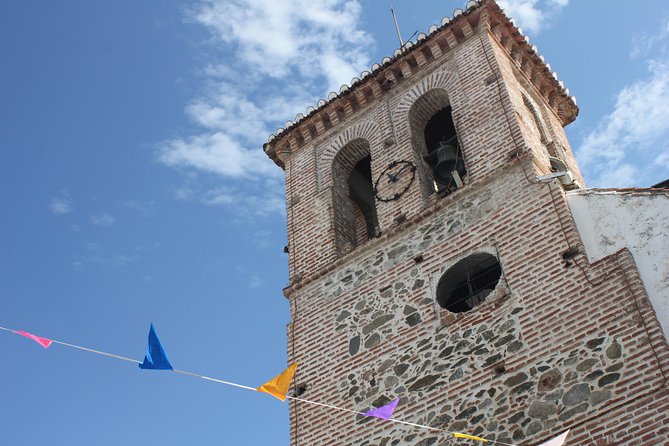
The last village stop is Moclinejo, a smaller place surrounded by mountains. This segment is shorter, with a brief walking tour to see key monuments and learn some village history from the official guide.
Even though it’s the final stop, it’s useful. By the time you reach Moclinejo, you’ve learned the production side in the cortijo and the cultural side in museums and village walks. Now you see how raisin life sits alongside broader Andalusian village history and architecture.
Your walking time here is listed at about 30 minutes, so it’s not a marathon. Still, you’ll be outside, so wear shoes that handle uneven pavement. If it’s hot, you’ll feel it here too.
What you learn about raisin making (and why it matters)
This tour’s strength is that it treats raisins as agriculture, not a souvenir. You’ll understand why Muscatel raisins are so closely tied to place: the grape variety, the drying process, and the long timeline required to get the final fruit. The day also helps you see why this tradition can be hard to keep financially viable, a theme echoed in the way people describe the experience.
You also come away with language for what you’re eating. Instead of just thinking of raisins as sweet and wrinkled, you’ll connect them to a harvest, a drying system, and the tools used on-site. That makes tastings more meaningful, even if you don’t become a raisin superfan.
Finally, the guide adds structure. The tour uses an official guide who is also your chauffeur and provides explanations in English, German, and/or Spanish. In practice, that often means you can follow the narrative cleanly without switching modes every time you get in and out of the van.
Lunch built on local products, plus dietary options and practical tips
Lunch is included, and it’s described as a menu prepared with local products. Vegetarian is available if you tell the operator when booking, and you can share any allergies or special requests ahead of time.
Think of lunch here as part of the learning arc. After seeing how raisins are made and hearing about raisin culture in the villages, you’re more likely to notice regional flavors and ingredients. It’s the payoff for spending the morning and early afternoon understanding the crop.
What to bring is straightforward and worth taking seriously:
- Comfortable shoes for village sidewalks
- A water bottle for the outdoor stretches
- Sun screen in hot months
- Anti-sickness medication if you get car sick
- Enthusiasm. This day works best when you enjoy questions and small details
Value check: how $100.88 makes sense for a full-day experience
At $100.88 per person, this isn’t a budget snack tour. But it also isn’t paying for a fancy hotel day. You’re paying for a full-day format with pickup and drop-off, a small group, an official guide who also drives, guided village visits, and included lunch.
Also, multiple visits are covered, including the Raisin Interpretation Center in El Borge and the Museo de la Pasa in Almáchar. That reduces the usual problem on food tours where you end up paying extra for each stop.
Where the value gets real is in the combination: production at a cortijo, cultural context in museums and villages, and a meal at the end. If you’re choosing between a quick driving tour and something you can understand and taste, this gives you more to chew on, literally and mentally.
Who should book this, and who might skip it
I’d book this if you like food culture that’s tied to real work. It fits travelers who care about agriculture, regional traditions, and understanding how a product is made. It also suits people who want a relaxed pace. With a small group and a guide who can keep things moving without rushing, the day feels easier than the typical big-bus approach.
You might think twice if you dislike walking outside, even if the walks are short. You’re also likely to spend plenty of time in a vehicle between stops, so car-sickness prone travelers should plan accordingly.
Good news: the tour is dog friendly if you contact in advance.
Should you book the Muscat Raisin Route?
If you want one clear, authentic day in the Malaga area that centers on a specific regional product, this is a strong choice. The recipe for success here is simple: a small group, a working raisin cortijo, village culture stops, and lunch included. The guide adds the human tone that turns production from facts into understanding.
Book it when you can handle sun, short walks, and a full-day schedule. If that sounds like your kind of travel day, you’ll come away with a new relationship to Muscatel raisins, not just a bag of sweets.
FAQ
How long is the Muscat Raisin Route tour?
The tour runs for about 8 hours 30 minutes.
Is lunch included?
Yes. Lunch is included as a menu made with local products. Drinks are not included.
Do you offer vegetarian meals?
Yes, there is a vegetarian option. You should advise the team at booking.
What size is the group?
It is a small group with a maximum of 8 people.
Where does pickup and drop-off happen?
Pickup and drop-off are offered for coast accommodations from Torre del Mar to Nerja. You can ask for other pickup or drop-off points.
What languages is the guide available in?
The official guide provides commentary in English, German, and/or Spanish.
What should I bring for the day?
Bring comfortable shoes and a water bottle. In hot months, use sun screen. If you get sick easily in cars, consider bringing anti-sickness medication.
Can I cancel for a full refund?
Free cancellation is available. You can cancel up to 24 hours in advance for a full refund. If you cancel less than 24 hours before the start time, the amount paid is not refunded.
Somewhere to Sit Down and Eat


More Tour Reviews in Malaga



Fresh on the Malaga list


Lunch Experiences, compared.
 ★ 4.1Sailing Catamaran with Swimming and Paella LunchFrom $53578 reviews
 ★ 4.0Morocco Day Trip with Tour Guide and LunchFrom $165452 reviews
 ★ 5.0White Villages Tour in the Nerja area: Small-Group Tour and LunchFrom $102127 reviews
 ★ 4.3Boat Tour w/ Snorkeling, Water Activities, and LunchFrom $101105 reviews
 ★ 5.0Semi-private Tour to Frigiliana and The Lost Village with lunch includedFrom $10252 reviews
 ★ 4.5Boat Tour with Snorkeling, Water Slide, Lunch and Pick UpFrom $10626 reviews
 ★ 5.0From Marbella: Ronda Tour Wineries Tour with LunchFrom $22221 reviews
 ★ 5.0VIP Ronda Wine Tour and Tasting and Gourmet Lunch Experience with WinemakerFrom $4318 reviews
Browse the lists this tour appears in