

REVIEW · CYCLING TOURS
Málaga: City Highlights & Hidden Gems Guided Vintage Bike Tour
Malaga looks best when you can move. This guided vintage bike tour strings together the city’s big sights plus quieter corners in under three hours. You’ll cover major districts by bike, then leave with a much clearer mental map of how Malaga sits between hills and the sea.
I love that the pace is active but relaxed: it’s a flat route and designed for a range of fitness levels. I also like the guide format, quick stops with real stories, plus practical tips for where to eat and what to try next. One thing to weigh first is that it’s not suitable if you have knee problems or if you don’t already know how to ride a bike.
Key Things That Make This Bike Tour Worth Your Time
- Small group size (max 12) means you get more attention at stops and better flow on the route
- Vintage bicycles add fun without making the ride feel complicated
- A flat coastal loop helps you see more city without turning the day into a workout
- Local guide storytelling includes specifics like La Manquita’s legend and Espetos at the beach
- Food and photo stops are built in, especially the Atarazanas Market and the gardens near Town Hall
More of the city, from the port up to Gibralfaro
- Málaga: Alcazaba and Roman Theatre Guided Tour With Entry★ 4.8 · 5,792 reviews
- From Malaga and Costa del Sol: Gibraltar Tour★ 4.4 · 4,483 reviews
- Malaga: Teatro Flamenco Malaga Live Flamenco Show★ 4.7 · 4,254 reviews
- From Málaga: Ronda+Setenil de las Bodegas with Little Train★ 4.6 · 4,115 reviews
Why Malaga Reads So Well From a Bike Seat
Malaga has a “two-world” layout. One side pulls you toward the sea, the other climbs up toward viewpoints and old stone. Walking is fine, but bike travel helps you connect the dots fast, especially on a short trip.
This tour also has a smart structure. You’re not doing one long sightseeing slog, you’re hopping between focused stops, then rolling on to the next area. That keeps the energy up and lets you learn the city’s patterns instead of just collecting landmarks.
And because it’s a small group, it tends to feel like a guided stroll, just with wheels. You can ask questions, and the guide can steer the conversation toward what you care about.
Ride Reality Check: Flat Route, Easy Timing, and What to Bring
The ride is planned for all fitness levels because it stays on a flat route and uses smooth, manageable streets. That said, there’s still a moving part to the day: you’ll be cycling between places, not standing still for long stretches.
The tour requires two basics. You need to know how to ride a bike, and it’s not suitable for people with knee problems. If either of those is an issue, consider a different style of tour, because no amount of good guiding can change the physics of pedaling.
For gear, think practical. Bring sun protection, and use light layers you can adjust if the coastal breeze feels cooler than you expected. If you’re sensitive to heat, start hydrating before the tour begins, because the ride covers a lot of open sky and sea air.
Timing matters too. The total is about 2 hours 50 minutes, so you’ll experience a full loop without losing your whole day. Most stops are around 10 minutes, with a couple longer moments at the market and the tavern where you can slow down.
Meeting Point and How the Tour Starts Clean
You meet at Pl. de Montaño, 4, Distrito Centro, 29012 Málaga, and the tour ends back at the same spot. That round-trip setup is underrated value. You don’t have to figure out how to get back across town once you’re done.
It’s also near public transportation, which helps if you’re combining this with other plans. I like tours that make it easy to layer your day, because that’s how you build a trip that feels effortless.
The tour uses a mobile ticket, so keep your phone charged and ready. You’ll likely want it handy for any check-in or updates the day of.
More rides around Malaga
Plaza de la Merced, Picasso’s Birthplace, and Malaga’s Bohemian Mood
Your first stop is Plaza de la Merced, a lively square where you get the city’s creative energy immediately. The Picasso statue is right in front, and the guide frames it with context about Picasso and his connection to Málaga.
This stop works for two reasons. First, it gives you an anchor point, so later stops make more geographic sense. Second, it sets the tone for the tour, with stories that are meant to connect art, architecture, and local life, not just name-drop.
It’s also a good “welcome pause.” You’re not yet deep into the bike ride, so it’s easier to get comfortable with the group and the route.
La Malagueta Bullring and the Beach Loop You Can Actually Feel
Next you head to Plaza de toros de La Malagueta, a major neo-Mudejar building dating to 1876. Because it sits near the water, you get a sense of Malaga’s contrast right away: grand historic structures by the beach.
The guide’s focus here is architecture and cultural significance across the centuries. That matters because a bullring is more than an exterior photo. You start to understand why this building sits where it does, and what role it played in local identity.
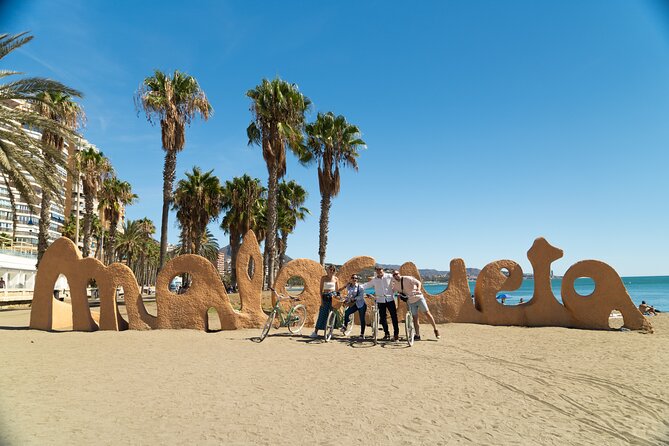
Then you roll to Playa de La Malagueta, where the atmosphere shifts. This is where you’ll learn about the traditional chiringuitos (beach bars) and what Espetos are, plus where you might find the best ones. Even if you’re not planning a long beach hang, this stop helps you connect the food culture to the shoreline.
Pro tip for the beach stop: if you’re taking photos, keep your timing tight. The best shots happen fast, and you’ll want your energy for the sea promenade segment next.
Puerto de Málaga, Palmeral Promenade, and the Pompidou Cube
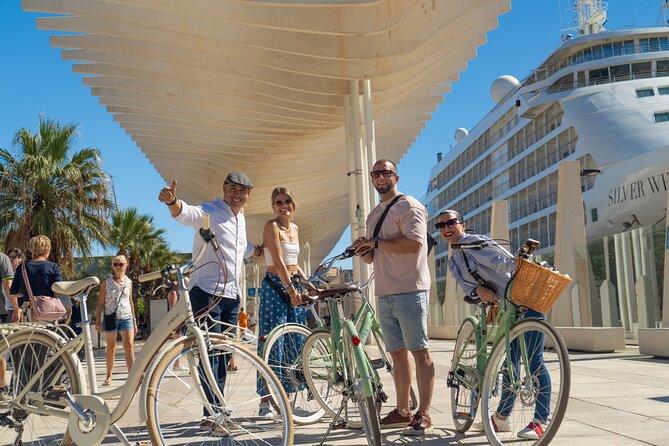
Cycling along Puerto de Málaga is one of the tour’s best “breathing” sections. You feel the sea air, and the ride is smooth. The route goes through the Palmeral promenade, which gives you a calmer, shaded-feeling segment while you travel.
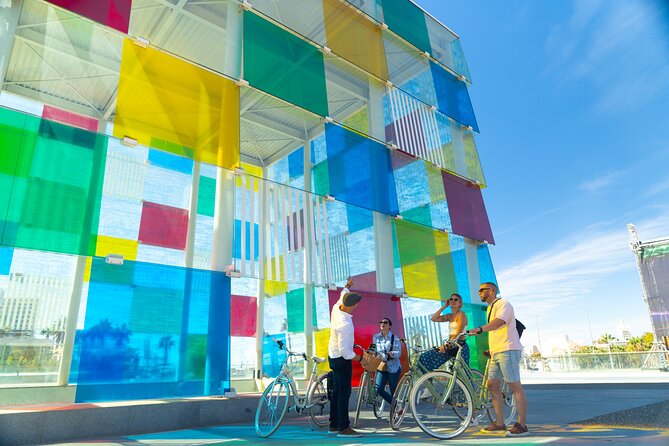
Along the way you pass the Cube, the colorful Pompidou Centre structure. It’s a striking modern counterpoint to the rest of Malaga’s sights, and it’s exactly the kind of detail that makes a bike tour more than just a checklist.
This stop is valuable because it shows you Malaga in layers, old and new. You’re moving through those layers rather than hopping between them later with taxis or long walks.
La Farola Lighthouse: The Story You Remember After the Photo
Then comes La Farola, the symbol of the coast and a viewpoint moment. The guide shares a fun detail: it’s one of the few lighthouses in Spain with a feminine name. That kind of specific trivia sticks because it’s tied to a real place you can see.
You also get panoramic views of the Mediterranean Sea. Even if you’ve seen plenty of coastlines in your travels, the viewpoint helps you place the city’s shape in your mind.
This is also where I think the bike timing is smart. You reach La Farola after you’ve already warmed up, so you have the energy to enjoy the view rather than just moving through.
Calle Larios and Malaga Cathedral: From the City’s Heart to La Manquita
After the coast, you ride into the city’s elegance at Calle Larios, often described as Malaga’s living room. Marble floors and stunning architecture make this street feel ceremonial, and the guide connects it to the Marquis of Larios and the city’s 19th-century transformation.
This part matters because it explains why Malaga looks the way it does. You’re not just seeing a pretty street. You’re learning what changed, when, and why the design reflects that ambition.
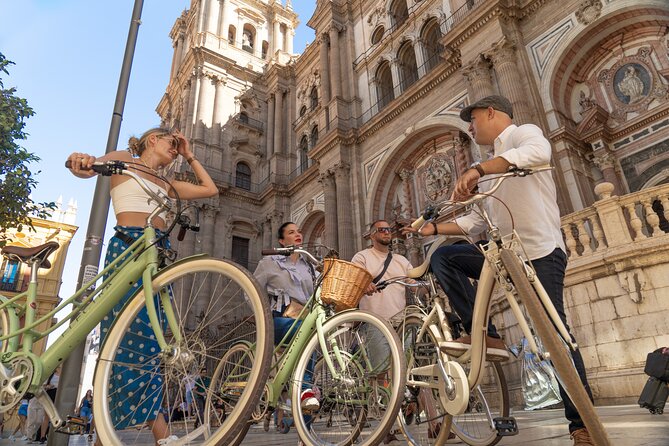
Next up is Malaga Cathedral, where you meet La Manquita, the One-Armed Lady. The guide tells the legend about why the second tower was never finished, tied to the cathedral’s history and the stories locals repeat. It’s the kind of stop that makes a building feel human and a little quirky.
The cathedral stop is also a visual payoff. From the ground up, it’s iconic, and the tour uses the time well so you can notice the scale without getting stuck in a long visit.
Mercado Central de Atarazanas: The Senses Beat the Script
One of the longer stops is Mercado Central de Atarazanas, with about 30 minutes there. It’s housed in a historic 14th-century Moorish shipyard, and the setting helps you understand why this market is so special beyond the food.
You’ll notice the giant stained-glass window depicting the city’s history. Then your senses take over. The guide points out local produce, seafood, spices, and the smells that define Malaga’s gastronomy.
This stop is where the tour becomes practical for your future meals. The guide’s perspective helps you understand what to look for if you return to the market on your own. Even if you don’t plan to buy anything, you’ll learn how locals think about ingredients.
If you’re sensitive to crowds or strong scents, go in with a flexible mindset. It’s a market, not a museum, and it can be busy. That’s normal here and part of the charm.
Jardines de Pedro Luis Alonso: A Rose and Orange Break from the Streets
Right near Town Hall, the tour takes you through Jardines de Pedro Luis Alonso. This is a quieter pause, built around fragrant rose bushes and orange trees. You get a little break from traffic and wide open sun.
The best part is the view angle. The gardens give one of the best ways to see Gibralfaro castle towering above the city, away from the busiest sightlines. Even if you have no plans to go up to the castle right now, seeing it from here helps you decide later.
The stop is about 15 minutes, so it’s enough time to enjoy the greenery, take a few photos, and feel refreshed before heading to the final cultural stop.
Antigua Casa de Guardia (1840): Chalk Bills and Sweet Wine Barrels
You finish with a special stop at the Antigua Casa de Guardia, described as the oldest tavern in Málaga, founded in 1840. The tour uses this time like a mini time machine.
Inside, you can peek at barrels of Málaga sweet wine. You’ll also learn why the bills were traditionally written with chalk on the wooden counter, which adds a vivid, old-school detail to the experience.
This final stop works because it blends history with everyday life. You’re not only looking at architecture now. You’re seeing how the city has served itself for generations, with a ritual that feels almost unchanged.
If you like to end a tour on a story, this one does it. It gives you something to remember that isn’t just a landmark photo.
The Real Magic Is the Guide, Not the Map
What stands out most from guide feedback is the combination of professional storytelling and specific recommendations. Guides such as Sergio and Ariel are praised for being knowledgeable, but also for making the tour fun and easy to follow.
A bike tour can go two ways. Either it’s quick stops with vague explanations, or it’s guided with real local context. This format leans toward the second. You’re told what a place means, plus what to do next.
That’s especially helpful in Malaga, because the city rewards curiosity. After hearing about Espetos and chiringuitos, or the legends behind La Manquita, you’re more likely to wander with intention rather than guessing.
How Much You Get for $35.60 and Under Three Hours
At $35.60 per person for about 2 hours 50 minutes, this is solid value if you’re trying to orient yourself and see a lot quickly. You’re covering major zones, from central squares to the seaside to the cathedral and market.
What makes it worth it isn’t only speed. It’s the “credit” you get toward future meals and sightseeing. The market stop helps you understand what locals buy and why. The beach stop sets you up for a better food plan. The cathedral and the architecture stops help you recognize what you’ll be looking at if you return on your own.
Also, the ride is described as flat and designed for a range of fitness levels. That means you’re not paying for an endurance challenge. You’re paying for efficient movement plus storytelling.
Who This Tour Is For (and Who Should Skip It)
This works best if you want an active overview without feeling rushed. If you’re comfortable riding a bike and your knees are okay, the route is a practical way to get your bearings fast.
It’s also a good choice for first-time Malaga visits. The stops create a coherent picture: creative roots at Plaza de la Merced, seaside culture at La Malagueta, modern contrast near Puerto de Málaga, and then back to the city’s architecture and food culture at the cathedral and market.
Skip it if you do not ride bikes yet, or if you have knee problems. In those cases, you’re likely to feel stressed during the ride, and the tour won’t feel relaxing.
Also, note the weather requirement. The tour needs good weather, so if your trip dates are unstable, you may want a backup plan.
Should You Book This Malaga Vintage Bike Tour?
Yes, if you want a fast, friendly way to see Malaga with real local context. I’d book it for a short stay because the route connects key areas efficiently, and the small group size helps you get a better experience than big-bus style sightseeing.
Book it especially if you care about food culture and street-level details. The Atarazanas market stop, the beach chiringuitos and Espetos explanation, and the 1840 tavern finale are the parts that make this feel like a day with stories, not just photos.
I would hesitate only if biking is a no-go for you, either because of knee issues or because you’re not confident riding. In that case, Malaga is still great, but you’ll be happier with a different tour style.
If you’re looking for an efficient first afternoon or morning to set up the rest of your trip, this tour is one of the most straightforward choices in Malaga.
More Tours in Malaga




More Tour Reviews in Malaga



Malaga, Three More Ways
Fresh on the Malaga list


Cycling Tours, compared.
 ★ 4.7Malaga Bike Tour – Old Town, Marina & BeachFrom $381,150 reviews
 ★ 5.0Rent a City Bike: Full Day 24 hoursFrom $21509 reviews
 ★ 4.8Castle Hill and Fisherman Village E-Bike TourFrom $48506 reviews
 ★ 4.7Highlights, Hidden Gems and Coast Vintage Bike TourFrom $33459 reviews
 ★ 4.8Guided E-Bike TourFrom $40428 reviews
 ★ 5.0Malaga Electric Bikes Guided TourFrom $43320 reviews
 ★ 4.3Electric Bike RentalFrom $35110 reviews
 ★ 5.0Personalised Road Bike Tour in MalagaFrom $14597 reviews
Browse the lists this tour appears in