
REVIEW · ALCAZABA & GIBRALFARO TOURS
Malaga: Alcazaba, Picasso and more, walking tour with 5 VR experiences !
Malaga has a way of rewriting itself. This 1.5-hour VR walking tour uses 360° reconstructions so the old city shows up right where you stand. I like how the guide ties the sights together into one clear story, and I also like the hands-on tech part, the goggles make history feel visible instead of abstract. One thing to consider: the experience is not a good fit if you are not comfortable with VR, because you will put on the headset multiple times.
You start in the old center area (C. Císter, 5), then you move site to site with an expert narrator. The stops connect Malaga’s big chapters, Phoenician roots, Roman cultural life, the handover of the keys to Isabella the Catholic, and Picasso’s world. One small caution, the tour is brief, so it is not meant to replace slower museum time or a full day in Alcazaba.
The result is a fast orientation to Malaga that still feels specific and place-based. With a 4.9 rating from 36 experiences, the biggest repeat praise is the guide quality, plus the sense that the VR moments are well done rather than just flashy. If you want a quick but meaningful start to your trip, this can be a strong choice.
Key highlights you should care about
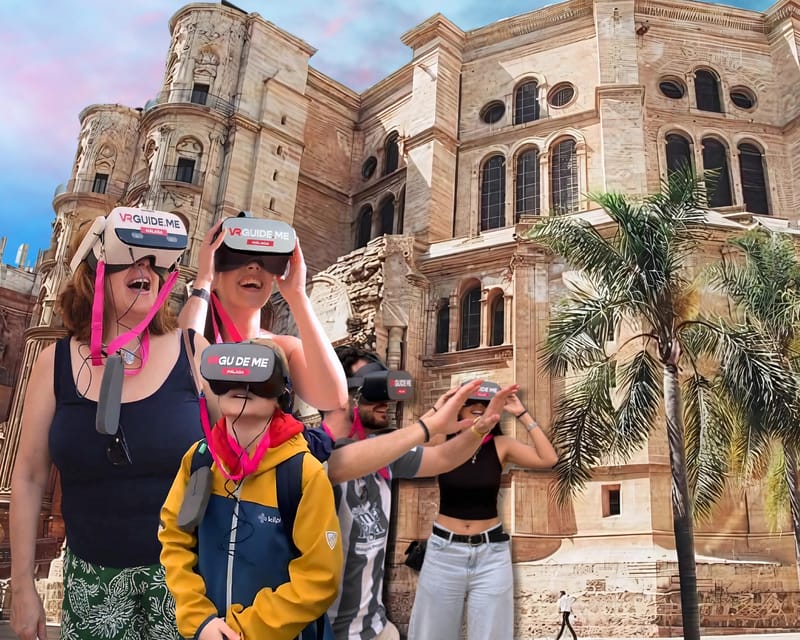
- 5 VR headset moments during the walk, timed to key monuments, so the tech supports the story
- Bilingual live narration (Spanish and English) plus an audio guide with several languages
- Malaga’s major landmarks in one route, including the Cathedral, Roman Theatre area, and Alcazaba gates
- Picasso and pre-Roman context built into the same walk, not treated as separate topics
- Guides who stay in control of the group flow, checking in and keeping you on track (Paulo and Sergio are named examples)
- 360° historical recreations designed to show what the city looked like centuries ago
More of the city, from the port up to Gibralfaro
- Málaga: Alcazaba and Roman Theatre Guided Tour With Entry★ 4.8 · 5,792 reviews
- From Malaga and Costa del Sol: Gibraltar Tour★ 4.4 · 4,483 reviews
- Malaga: Teatro Flamenco Malaga Live Flamenco Show★ 4.7 · 4,254 reviews
- From Málaga: Ronda+Setenil de las Bodegas with Little Train★ 4.6 · 4,115 reviews
A 90-minute walk where Malaga changes outfits with VR

This tour is built around a simple idea: you do not just look at Malaga’s monuments, you time travel while standing in front of them. You walk through the historic center, and at several points the guide cues you for VR goggles. Then the 360° scenes flip the context from present-day stones to older streets, buildings, and city life.
What I like most is that the VR moments are not random. They connect to what you are seeing in real life, so you leave with a mental map of where things sit, and why they mattered. You get an expert narration thread that keeps you from feeling lost in the mix of Cathedral, fortress, and artist sites.
Start at Císter, 5, then let the guide set the pace

The meeting point is on C. Císter, 5. When you arrive, you will spot the guide holding a blue umbrella, with the VR goggles hanging around their neck. Plan to arrive a few minutes early, because the tour starts promptly and you want to be ready to move.
Once you begin, the pace is practical. You are not expected to wander on your own, and you are not stuck waiting around either. A specialized technical escort is part of the experience, which matters because VR works best when setup and switching between headsets and walking stays smooth.
If you are the type of traveler who likes a clear plan, this fits. If you hate wearing headsets and would rather read plaques at your own speed, you might find the repeated VR pauses a bit much, since you will use the goggles multiple times.
Plaza de los Naranjos mood, then the Cathedral story
From the Císter area, the tour’s story focus quickly lands you in Malaga’s core. One of the featured locations is the Patio de los Naranjos, a place many visitors know by name, but few understand in context. The guide uses that moment to set the tone: Malaga is a layered city where different civilizations left marks, and those marks still shape the streets.
Next comes the Malaga Cathedral stop, guided for about 15 minutes. This is where the walking tour becomes more than sightseeing. The guide frames the Cathedral not as a standalone monument, but as a result of Malaga’s longer history and shifting power over time. You learn how to read the present as a snapshot of earlier chapters.
A good tip: keep your questions ready. The guide style is active, and several guides on this tour are praised for staying clear and for engaging you, including asking questions to make sure you are following each step.
Other walks through the Alcazaba and up to the castle
Museum stop and the route that keeps you oriented

After the Cathedral, the tour includes time at the Malaga Museum for another guided segment. This part helps you shift from grand architecture to the human stories that connect periods together. Even if you do not think of yourself as a museum person, this is often the moment where a tour starts clicking, because you begin to see how objects, eras, and places link.
The pace stays consistent, with guided time blocks across the route. One practical benefit of that structure: you do not end up sprinting between sites. You get just enough time to understand what you are looking at before you move on.
There is one tradeoff. Because the walking is compressed into a short, 1.5-hour experience, you will not get deep museum time in the way you would on a full museum visit. Think of this as an informed introduction that helps you decide what you want to do after.
Roman Theatre area, where ancient Malaga had a social heartbeat
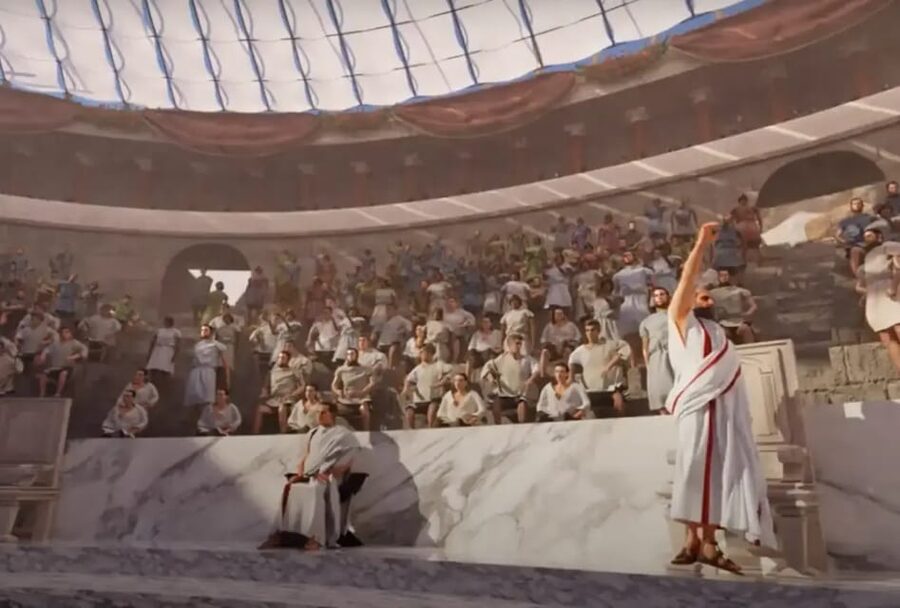
Then you move toward the Roman Theatre area, another guided stop around 15 minutes. This is a highlight for the way the story is framed. Instead of treating Roman remains as silent ruins, the narration emphasizes the Roman Theatre’s role as a cultural center.
This is also one of the spots where VR can feel most rewarding. You are standing in the general area, then the 360° recreation helps you imagine the scale and the movement of a public space, something your brain tends to struggle with when ruins are all you see.
If you love architecture and city planning, you will likely enjoy how the guide connects the Theatre to the idea that Malaga used to be a place where people gathered, talked, performed, and lived in the same spaces that later civilizations repurposed.
Phoenician roots and the keys handed to Isabella the Catholic
A standout theme across the tour is Malaga’s layered origins. You get a look at the Phoenician settlement at Cerro del Villar as part of the narrated background. The goal here is not to turn your tour into a lecture, it is to help you understand why Malaga’s location mattered from the beginning.
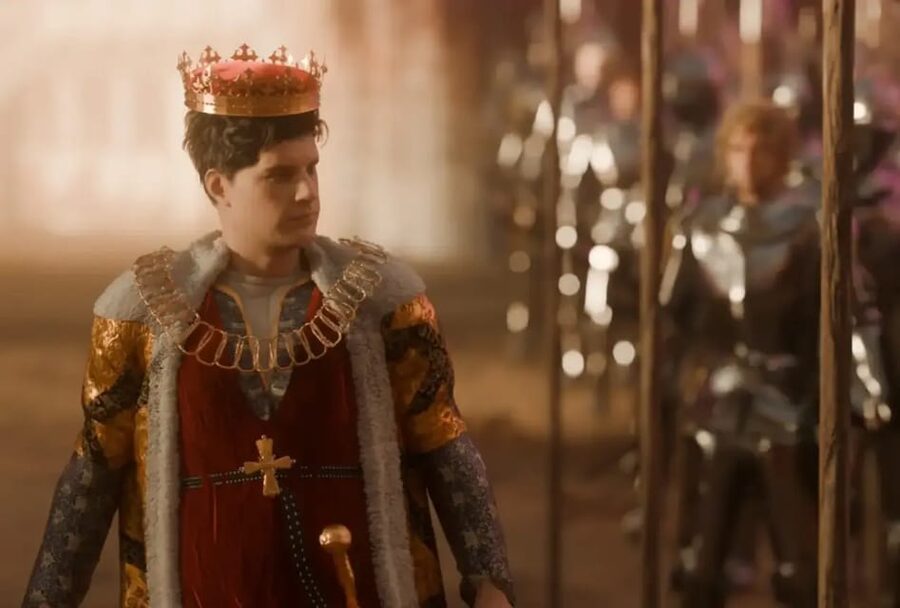
You also hear about the famous moment of the handover of the keys to Isabella the Catholic. That story is a classic turning point, and in this tour it is used to explain how political shifts change the built environment and the meaning of power in a city.
This part is valuable because it gives you dates and turning points you can hang later details on. Without that, Malaga can feel like a string of beautiful landmarks. With it, the route becomes a timeline you can recall.
Picasso’s life and birthplace museum, art as a city chapter
The tour does more than say Picasso is from Malaga. You connect his life to places you can actually point to. The route includes Picasso’s Birthplace Museum for a short guided visit.
This segment helps you see why Picasso belongs on the same walk as fortress walls and ancient ruins. The guide’s narration links his early environment to the broader cultural identity of the city. Even if you already know Picasso’s name, you will likely appreciate the way the guide slows down the story, so it does not just become an art-history label.
One note for expectations: the stop is timed and relatively brief. If you are a serious Picasso fan, you might want to plan extra time after the tour to revisit the museum at your own pace.
Alcazaba fortress and the big gate moment on Alcazabilla Street
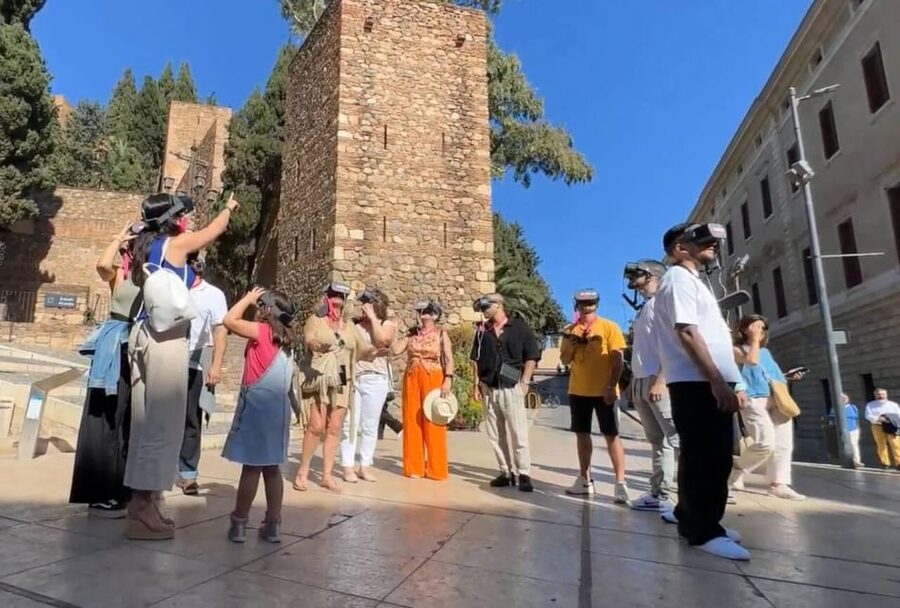
Next up is the Alcazaba of Malaga. You get guided time at the fortress, including the setting that ends with a strong sense of arrival at the Alcazaba Gate area on Alcazabilla Street.
This is the part of Malaga that feels like it was built to command views. The narration connects the fortress to the broader city story, and the VR pauses here can help you imagine what the space was built to defend and display.
Practically, this is also where the tour earns its “short but complete” vibe. You walk through a sequence that takes you from civic monuments to defensive architecture to the city’s artistic identity, then closes with the Alcazaba gate moment.
After that, you return to the meeting point. So do not plan to immediately jump to a museum later without checking your energy level, because your feet will have done their job by the time you are done.
Guide power: why Paulo and Sergio get named
The biggest repeat praise is guide quality, and two names show up clearly: Paulo and Sergio. People love the historical context they provide, and they also mention the way the guide keeps explanations clear and engaging.
One reason this matters is that VR tours live or die by pacing. If the guide rushes, you miss the link between VR scenes and real landmarks. If the guide communicates well, you leave feeling like the headset is a tool, not a distraction.
Sergio is specifically mentioned as friendly and knowledgeable, and one highlight is that the guide did more than promised, adding extra insights. Paulo is praised for offering amazing historic context, and there is even a note that kids enjoyed it.
That tells you something useful: the tour is not only for adults. It can work as a family-friendly educational outing, as long as everyone meets the age guidance (it is not suitable for children under 7).
Is VR actually worth it, or just a tech show?
VR is the whole point here, so it is worth asking the blunt question. In this case, the VR moments seem to earn their place because they are tied to what you see: ancient streets, past city scenes, and turning points that help explain why monuments look the way they do.
The 360° recreation format is also practical. You can turn your head within the scene, which helps you build a spatial memory. That matters for Malaga, where the historic center can feel like a maze if you do not get oriented early.
Still, it is not a “no-risk” experience for everyone. If you dislike VR headsets, get motion discomfort, or do not want to stop and put on gear multiple times, you will likely feel annoyed instead of excited. The tour is designed to be smooth and hassle-free, but it is still VR, and it is still a set schedule.
Price and value: what $23 buys you in real terms
At $23 per person, you are paying for four things you would otherwise have to assemble separately: a guided walk through major monuments, VR goggles rental, several guided VR moments with 360° reconstructions, and a technical escort to keep everything running.
For comparison, traditional walking tours that focus only on narration can cost similar amounts, but you do not get the 360° “place it in front of you” effect. Museum-focused tours might include more content, but they often cost more and they do not always include the citywide timeline.
Where this tour wins is the combination. You get a structured introduction to Malaga’s big themes in a short time, and that can save you energy later. You spend less time guessing which monument connects to which story, and more time choosing what you want to revisit.
It also helps that you are not locked into a long day. With a 1.5-hour duration, you can use this as your first or second day activity, then build the rest of your itinerary around what grabs you.
Who should book this Malaga VR tour
This tour is a strong fit if:
- you want a quick introduction to Malaga’s main layers, Phoenician, Roman, medieval, and Picasso
- you like guided storytelling and want someone to connect the dots for you
- you are curious about VR and happy to wear goggles a few times
It may be less ideal if:
- you dislike VR headsets or want a fully self-paced visit
- you need a very deep museum experience during the session itself
- you are traveling with people who do not meet the suitability guidance
Also note the tour has rules that keep it comfortable for everyone. Alcohol and drugs are not allowed, and that helps keep the VR environment more stable and less disruptive.
Should you book this Malaga VR tour?
If you are trying to get your bearings fast and you like the idea of seeing the past in context, I would book this. The guide-led structure is the secret sauce, especially because guides like Paulo and Sergio are repeatedly praised for making the history clear and enjoyable. The VR moments are not just decoration either, they are tied to specific places like the Cathedral area, the Roman Theatre setting, and the Alcazaba gate.
If you are on the fence, use this test: would you enjoy a short, guided, tech-assisted orientation that helps you plan your next moves? If yes, go for it. If you prefer to skip headsets and read slowly on your own, save your money and choose a traditional walking tour instead.
FAQ
How long is the Malaga VR walking tour?
The tour lasts about 1.5 hours.
What is the meeting point for the tour?
You meet at C. Císter, 5. The guide will be holding a blue umbrella and wearing VR goggles around their neck.
How much does the tour cost?
The price is $23 per person.
Are virtual reality goggles included?
Yes. VR glasses are included for the experience.
What languages are available?
The live tour guide speaks Spanish and English. An audio guide is also included with multiple language options, including English, Spanish, French, Italian, and German.
Is the tour wheelchair accessible?
Yes, the experience is wheelchair accessible.
Is the tour suitable for young children or everyone?
It is not suitable for children under 7 years, pregnant women, or visually impaired people.
More Tour Reviews in Malaga



Fortress, Theatre and Castle





Malaga, Three More Ways
Fresh on the Malaga list


Alcazaba & Gibralfaro Tours, compared.
 ★ 4.8Alcazaba and Roman Theatre Guided Tour With EntryFrom $145,792 reviews
 ★ 5.0Alcazaba Malaga Guided TourFrom $211,457 reviews
 ★ 4.5Malaga Tour with Cathedral, Alcazaba and Roman TheatreFrom $45548 reviews
 ★ 4.7Cathedral, Alcazaba, Roman Theater Walking TourFrom $53315 reviews
 ★ 4.8Gibralfaro Castle, Bullring and Port Segway TourFrom $42298 reviews
 ★ 4.7Tour to GibralfaroFrom $35182 reviews
 ★ 5.0Malaga Private Walking Tour, Alcazaba & Catamaran CruiseFrom $264159 reviews
 ★ 4.9Malaga segway: Panoramic tour of GibralfaroFrom $4194 reviews
Browse the lists this tour appears in