
REVIEW · RONDA TOURS
Guided tour of Ronda with an official guide
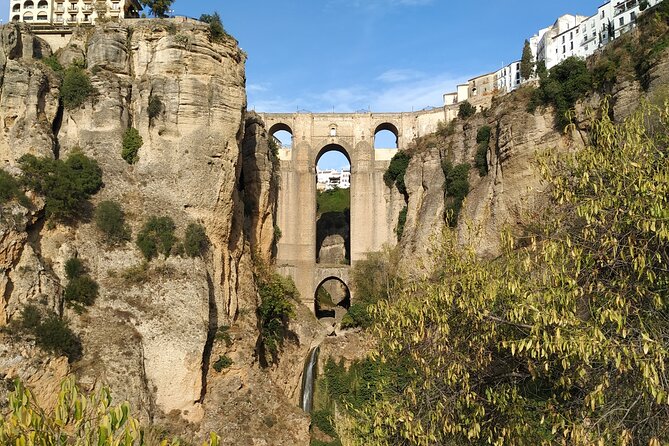
Ronda’s edge of the Tajo makes you slow down, and this guided walk is a smart way to see the highlights with an official local perspective. I like that you get an official guide for the full time, and I also like the way the route builds multiple viewpoints so your photos come out looking like the postcards. One thing to consider, though, is that this is still a walking tour, and it is not recommended for mobility difficulties.
If you love stories tied to real places, this tour keeps things moving. I like that the guide connects Ronda to big names like Orson Welles and Ernest Hemingway near the historic bullring area, and then turns back to the stone details around Puente Nuevo. The pace is quick, with short stops that work best if you want an efficient orientation rather than long museum time.
Quick facts that matter before you go
This is a private tour for your group, up to 15 people, priced at $230.80 per group (mobile ticket, English). It runs about 2 hours, starts at Pl. de la Merced, 1 and ends at Pl. España, 2 (in front of the Parador de Ronda), and it works only in good weather.
More runs up into the sierra
- From Málaga: Ronda+Setenil de las Bodegas with Little Train★ 4.6 · 4,115 reviews
- From Malaga: Ronda and Setenil Guided Tour Day Trip★ 4.5 · 3,072 reviews
- From Malaga: Ronda and Setenil de las Bodegas Day Trip★ 4.6 · 1,552 reviews
- From Malaga: Ronda & Setenil de las Bodegas Guided Day Trip★ 4.7 · 600 reviews
Key highlights to expect
- Puente Nuevo from several angles, including the classic Cuenca Gardens and viewpoint stops
- Alamenda del Tajo viewpoints that give you the “wow, Ronda is real” perspective fast
- Historic bullring context, with Orson Welles and Ernest Hemingway woven into the area’s story
- Jardines de Cuenca rose terraces, timed for color when blooms are in season
- Architecture layers at Santa María de la Encarnación, including its earlier mosque foundation
- Town square and town hall area, with Plaza Duquesa de Parcent and its landmark church façade
Entering Ronda by the Tajo edge, Alamenda del Tajo to the viewpoints
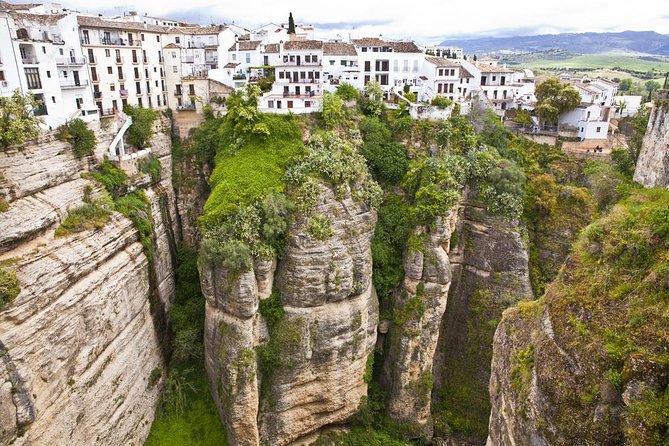
You start your walk in the area of Pl. de la Merced, and quickly you are thinking in cliffs and edges. The first stop is Alamenda del Tajo, a park tied to Ronda’s most important viewpoint network. Even if you have seen photos before, standing here changes the scale. The canyon drops away, and suddenly the bridge makes sense as more than a pretty object.
I like this first segment because it functions like orientation. You get your bearings fast: where the Tajo gorge sits, where you will later cross, and which angles matter. The stop is short, but it gives you a mental map for the rest of the route.
What to watch for
This is a park setting with viewpoints, so wear shoes you trust. If you are coming straight from Malaga, you might feel the day differently once you start walking near the cliff edges. You do not need hiking gear, but you do want grip.
A few more guided options in Malaga

The New Bridge photo angles are the whole point here
Next comes the heart of Ronda: New Bridge, Puente Nuevo. It was built in the 18th century, and it is the monument almost everyone comes to photograph. The smart part is not just seeing it once. The route is arranged so you view it from multiple corners and in different sight lines.
That matters because Puente Nuevo looks different depending on where you stand. From one side you see the height and the stonework lines. From another, you see how it sits over the gorge. If you plan to take photos, this design helps you get at least one shot that looks natural and one that looks dramatic, without sprinting around town on your own.
The quick-stop reality
Each major highlight is given a short window, about 10 minutes at each listed stop. That works if your goal is a hit list plus good explanations. If your goal is slow wandering, you may want to add free time afterward.
Old bullring area, plus Orson Welles and Ernest Hemingway context
The route then moves to Paseo de Blas Infante, where you find the oldest bullring in the world. More than just a fact drop, the guide uses this area to explain how the square developed and how Ronda’s culture connects to it.
A fun detail here is the connection to Orson Welles and Ernest Hemingway and the Ordoñez dynasty. The tour does not treat these as trivia. It uses them as a way to explain why Ronda attracts artists and writers, and why the town keeps showing up in stories beyond Spain.
Why this stop is worth your time
If you skip this area, you miss part of the Ronda personality. The cliff views are jaw dropping, yes, but the bullring and surrounding streets give you a different kind of context. It shows the town as a social center, not only a scenic spot.
Jardines de Cuenca, terrace views, and roses with a built-in excuse to linger
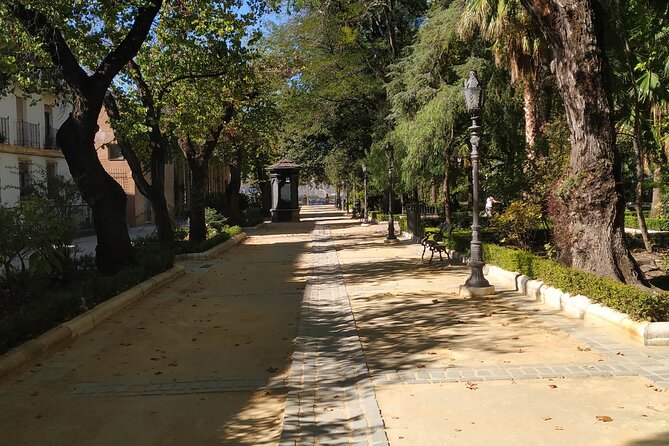
Then you reach Jardines de Cuenca, the hanging garden concept that comes from the twinning between Cuenca and Ronda. You go down terraces facing the gorge, with bridges and the Tajo area in view. The stop includes a mention of the gardens having 30 varieties of roses, and when they bloom, this area turns bright and colorful.
Even if you hit the gardens when roses are not at peak, the terrace layout does the job. You get multiple viewpoints in a compact space, and your camera stays busy without you needing to chase it.
A small tip that helps
Bring a moment of patience for stairs and edges. Gardens on ledges are lovely, but they are not flat strolls. Take it slow, especially if it has been hot or recently dry. Your guide can point out safe footing as you move.
Puente Viejo and the story behind the secret mine
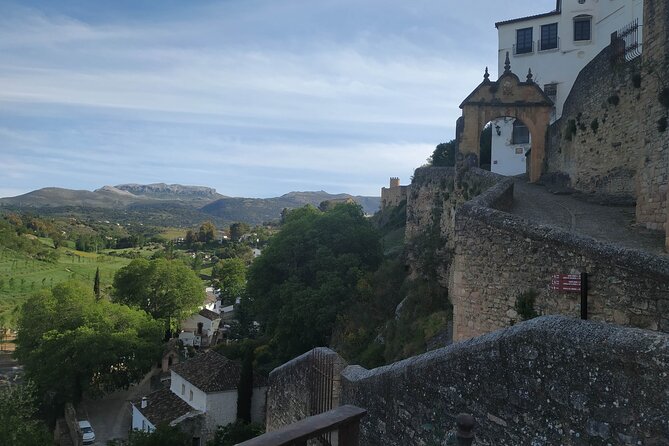
From the Cuenca Gardens area, you arrive at Puente Viejo through the route the tour uses. This is where you get one of the best “relationship shots” between old and new. You can look back at Puente Nuevo and also see the Casa del Rey Moro from this vantage line.
The guide adds the story of the Secret Mine. That kind of background makes the old bridge area feel less like a stop and more like a chapter. Instead of just looking at stone, you start thinking about how people got water and materials, how they defended the city, and how the city was planned around the cliff.
What you gain by coming here
If you want to understand Ronda, you need more than one landmark. Puente Viejo and the surrounding angles connect the big bridge to older city life and older infrastructure. It is also a great spot to pause because the viewpoints naturally slow you down.
Palace facades and the siege water staircase to the Guadalevín River
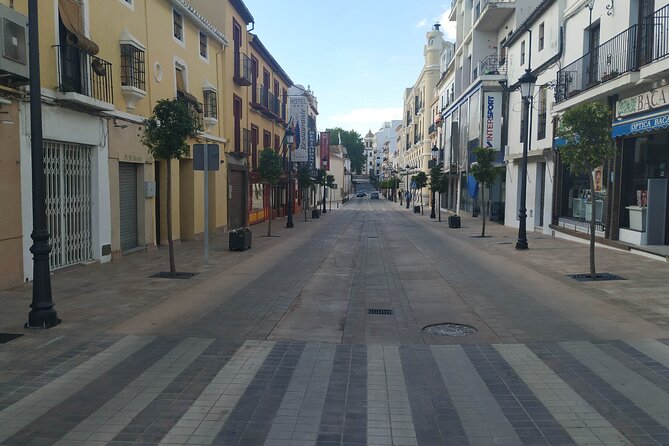
There is a pair of palace-focused moments in this walk, and they add a surprising practical side to the sightseeing. One stop explains the rear façade of an 18th-century palace and points out where the staircase excavated inside the rock begins. That staircase leads toward the Guadalevín River.
The key idea here is usefulness during siege periods. The grotto area was used to supply water to the city. That is not just a dramatic story. It helps you understand how Ronda survived in a cliff setting where access routes matter.
The Madonna video clue, and why façades carry modern echoes
Another stop focuses on a palace façade described as one of the most beautiful in Ronda, and the guide shares secrets tied to what the building holds. A memorable detail in the tour is that Madonna made a video clip on these streets.
Even if you are not a pop-culture person, this is useful because it highlights how Ronda’s old streets still show up in modern media. The guide uses that connection to keep the streets from feeling like background scenery.
Plaza Duquesa de Parcent: the town square, the church, and the layered ground beneath it
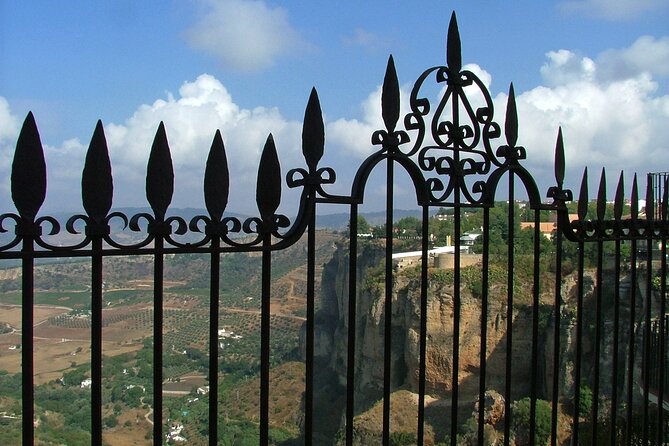
Plaza Duquesa de Parcent is one of the main places in town. The tour uses it as a transition from viewpoints back to civic Ronda: the Main Church and the Town Hall sit here. The gardens in this plaza are credited to Forrestier, which gives you another thread to follow beyond pure cliff views.
Then comes the Collegiate Church of Santa María de la Encarnación. Here, the guide explains the layered history very clearly: the church is built on the most important mosque, and the mosque in turn was located where an early Christian basilica stood. You also learn about the original door being covered by a balcony built during the 18th century.
Architecturally, the church includes two areas: one late Gothic style and one Renaissance style. That kind of detail makes the façade feel like a timeline you can see with your own eyes.
If you care about architecture
This is one of the best stops for anyone who likes to read buildings like pages. Even if you only have 10 minutes, the guide’s explanation helps you notice what you might otherwise miss, like the mix of styles on the front and the story behind changes.
Mirador de Aldehuela and El Campillo: the last look before Plaza de España
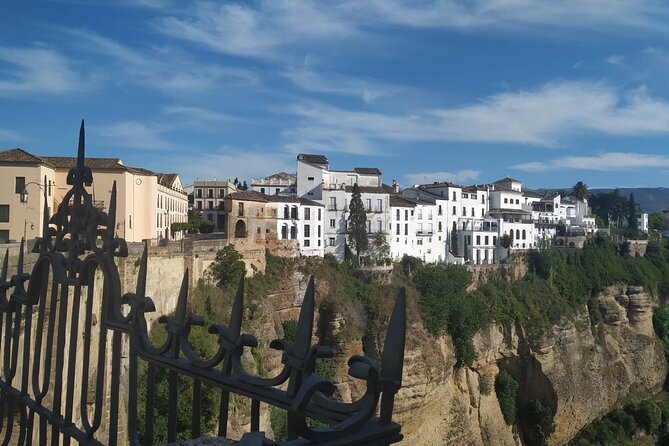
Near the end, you pause at Mirador de Aldehuela, just before crossing Puente Nuevo to head toward Plaza de España. This viewpoint gives you a wide view of Puente Nuevo and the route that makes it look so dramatic from afar.
Then you finish with Plaza de María Auxiliadora, also known as El Campillo. From here, the viewpoint covers the Sierra and the Hoya del Tajo. It is a strong closer because it makes you feel the entire setting, not only the bridge and buildings.
Why this ending matters
Many tours rush the ending. This one saves the wide views for near the finish, so your last images feel big. When you step into Plaza de España, you are ready to connect the map in your head to real streets.
How much time you really get, and why 2 hours is a good deal
The tour runs about 2 hours, with listed stops around 10 minutes each. That structure is ideal for a first visit to Ronda because it gives you a clear overview without draining your whole day.
It is also a practical fit if you are based in Malaga and want one focused outing. You can do this walking tour, then return for a longer revisit later to linger in the neighborhoods you like best.
Walking pace and who it fits
This is not described as a strenuous hike, but it is not flat either. There are gardens, viewpoints, and bridges, which usually means stairs and uneven stone. If you have mobility concerns, the experience is explicitly not recommended for mobility difficulties.
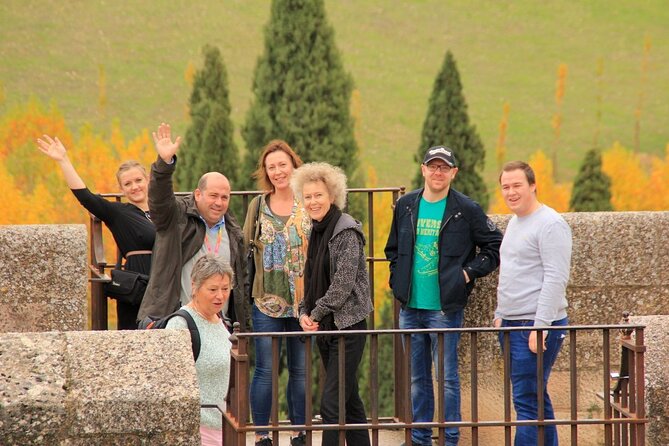
For families, the route is often a win because the guide can keep kids engaged while you move from one “wow” stop to the next. Local guides named in past tours include Alfredo, Milagros, Sonia, Marta, Carmen, Claudia, and Anna, and they are praised for adapting explanations for different ages.
Price value: $230.80 per group up to 15
Here is the practical math. The price is $230.80 per group, up to 15 people. If you book with a group that fills close to 15, it can work out to about $15 per person. Even with fewer people, you still generally get strong value because the guide covers several major landmarks in a tight walking format.
The big value ingredient is the official guide plus the way the tour connects each view to a story. You are not just collecting photos. You are learning what to look for, which saves time when you are wandering on your own later.
When the price feels best
This tends to make most sense if:
- You want a structured first-day orientation
- You prefer a guide-led route over piecing together viewpoints yourself
- You are traveling in a small group, friends, family, or a couple
If you are the type who hates guided groups and wants complete freedom, you might prefer self-guided time. But if you want to make Ronda feel understandable fast, this price structure is hard to beat.
Weather and getting the most out of the plan
This experience requires good weather. That is not just fine print. The cliff viewpoints and open-air gardens are the main events. If it is rainy, windy, or too cold, you lose the full effect.
If weather causes cancellation, you should expect an alternate date or a full refund. I would also plan your Ronda day with extra flexibility, especially if you are doing multiple activities in southern Spain.
Should you book this Ronda guided walk?
Book this tour if you want an efficient, high-impact introduction to Ronda. You get the cliff viewpoints at Alamenda del Tajo, the must-see Puente Nuevo, terrace time at Jardines de Cuenca, and the key religious stop at Santa María de la Encarnación with its layered mosque and church story. You also get practical connections, like the siege water staircase toward the Guadalevín River and the Secret Mine tale, which make the town feel more lived-in.
Skip or reconsider if you cannot handle a walking route with viewpoints and gardens, or if you want long unhurried time at just one place. This is a curated circuit, not a slow sit-down day.
If you can, do it early in your visit. It makes the rest of your time in Ronda much easier to enjoy because you understand what you are seeing and why it matters.
FAQ
How long is the guided tour of Ronda?
It is about 2 hours.
How much does the tour cost?
The price is $230.80 per group, up to 15 people.
Where does the tour start and end?
It starts at Pl. de la Merced, 1, Ronda, and ends at Pl. España, 2, in front of the Parador de Ronda.
Is the tour private?
Yes. It is a private tour, and only your group participates.
What language is the tour offered in?
The tour is offered in English.
Are tickets included for the sights?
The stops listed show Admission Ticket Free for each featured location.
Is the tour suitable for mobility difficulties?
It is not recommended for travelers with mobility difficulties.
What happens if weather is poor?
This experience requires good weather. If it is canceled due to poor weather, you will be offered a different date or a full refund.
More Tours in Malaga


More Tour Reviews in Malaga

Ronda and the Sierra, Keep Looking


Fresh on the Malaga list


Ronda Tours, compared.
 ★ 4.6Ronda+Setenil de las Bodegas with Little TrainFrom $344,115 reviews
 ★ 4.5Ronda and Setenil Guided Tour Day TripFrom $653,072 reviews
 ★ 4.8Ronda and Setenil Tour with Scenic TrainFrom $282,895 reviews
 ★ 4.6Málaga & Costa del Sol: Ronda and Setenil de las BodegasFrom $232,376 reviews
 ★ 4.6Ronda and Setenil de las Bodegas Day TripFrom $291,552 reviews
 ★ 4.7Ronda & Setenil de las Bodegas Guided Day TripFrom $30600 reviews
 ★ 3.9From Costa del Sol: Ronda Village Tour w/ Maestranza TicketFrom $78478 reviews
 ★ 4.5Ronda: Guided Walking Tour with English or Spanish GuideFrom $29423 reviews
Browse the lists this tour appears in