
An English graveyard in Málaga sounds odd, and that is why it works. This English Cemetery tour turns stone, angels, and Celtic crosses into clear stories, from the tragic beginnings to the garden paths. I especially like how it focuses on symbolism you can interpret on the spot, and how it gives names and context rather than vague atmosphere. The main drawback is simple: there are slopes and terraces, so it is not a good match if walking is hard.
You will start at the gate with a short historical intro, then move through courtyards and terraces to understand types of burials and who the notable families were. If you get a guide like Loli, expect a friendly, fast-moving explanation style that keeps the tour from feeling like a lecture. Just plan for it to be outdoors and on your feet for about 2 hours, so wear shoes you trust.
Key highlights worth your time
- Start at the entrance gate with a historical setup for the cemetery’s tragic beginnings
- Terraces and courtyards that show how different burials and families were arranged
- Robert Boyd and the frigate Gneisenau stories that explain why the cemetery exists
- Symbol spotting, from memorial benches and Celtic crosses to the Angel of Anna
- A garden walk that makes the cemetery feel like a place you can wander, not just pass through
- Finish at Casa del Guarda, right back near where you began
Still deciding? A few more Malaga trips in the same bracket.
- Málaga: Alcazaba and Roman Theatre Guided Tour With Entry★ 4.8 · 5,792 reviews
- From Malaga and Costa del Sol: Gibraltar Tour★ 4.4 · 4,483 reviews
- Malaga: Teatro Flamenco Malaga Live Flamenco Show★ 4.7 · 4,254 reviews
- From Málaga: Ronda+Setenil de las Bodegas with Little Train★ 4.6 · 4,115 reviews
Why Málaga has an English cemetery in the first place
This is not a random cemetery stop. The big idea is that you are seeing a city within a city, a place created by people living far from home. Málaga’s Cementerio Inglés exists because living communities brought their grief, their beliefs, and their customs with them, then shaped that into stonework you can still read today.
The tour frames the cemetery as a cultural and heritage legacy, written in monument form. That matters, because without context, grave markers can look like decoration. With context, you start seeing patterns, symbols, and choices that reflect identity and faith.
You also get a clear promise of what the tour will help you notice: the different terraces and courtyards, the types of burials, and the prominent figures and families connected to the city. It is a history lesson, but with your feet moving, not your eyes glued to a sign.
The 2 hour walk you will actually enjoy (terraces, courtyards, and stonework)
The pace is built for wandering. After meeting at the entrance area, you will be on a guided route that includes walking through the cemetery’s terraces and courtyards. The time outdoors is about 2 hours, and the route is designed to keep showing you new “zones,” not just one long straight line.
Here is what I’d expect you to appreciate most. First, the tour highlights how burial layouts change across the property, so you can understand that this is not one uniform style. Second, you will be taught what to look for when you see inscriptions and motifs, so you do not just pass by monuments you cannot read.
Practical point: the cemetery has slopes and terraces. Bring comfy shoes, because you will feel the ground under you. Also bring water and, if weather looks moody, an umbrella. The tour advises an umbrella, and it is good planning for Málaga’s changing conditions.
Stories in stone: Robert Boyd and the Gneisenau
The cemetery tour becomes memorable when the guide connects monuments to specific lives. Two of the most dramatic storylines you will hear are the tale of Robert Boyd and the tragedy connected to the sinking of the frigate Gneisenau.
These are the kinds of stories that make you slow down without being forced to. Instead of just seeing a name, you start to understand what that name likely stood for in its moment: loss, distance, and the need to mark memory in a way the living could interpret.
This is where a strong guide makes a difference. In the feedback for this tour style, people liked how the guide was able to explain symbolism and “read” what is on the tombs. If you like tours where you walk away with mental tools, not just facts, this part is the reason.

Symbol spotting: angels, Celtic crosses, and funerary language
Cemeteries are full of religious and cultural shorthand, but most of us only notice the obvious. This tour helps you notice the rest. You will learn about a wide variety of funerary symbolism, with one standout being the Angel of Anna.
The goal is not just to point at a sculpture and move on. The tour explains what the symbols mean and how they connect to beliefs and identity. When you know what to look for, the carvings stop being random and start feeling intentional.
Celtic crosses also play a role. They are one of those motifs people recognize visually, but the tour approach helps you understand why they appear and what they communicate. You will also encounter details like the most beautiful angel and other visual markers that turn grief into a kind of message.
And yes, there is a garden element too. That matters because the cemetery is not only about stone and tragedy. It is also about the living shaping a space where memory can be visited with dignity, not just stared at from a distance.
The people behind the names: families, memorial benches, and clues
Part of what makes this tour worth the small price is that it gives you names and identifiers. You will hear who the first person buried was, and you will also learn about William Mark. You will get answers to questions like who was first, plus what certain objects are intended to represent.
Two examples you will be taught to look for are the memorial bench and the red poppy. It is easy to walk past a bench or plant motif without realizing it is a deliberate part of the cemetery’s visual story. The tour helps you interpret these elements so you know what you are seeing when you look down.
The tour also walks through prominent families and how they mattered to the city. That is a valuable layer, because it turns the cemetery from a list of gravestones into a map of community connections. You start to understand that the cemetery is part of Málaga’s story, not an isolated corner.
Garden paths and the Casa del Guarda finish
One of the more pleasant surprises in this kind of tour is how the setting affects your attention. The cemetery is described as having a spectacular garden, and the route uses that garden quality to keep things human-scale rather than heavy and rushed.
You will move through different terraces and courtyards, and the tour uses those changes in space to break up the themes. Some monuments draw you toward tragic context. Others invite you to read symbolism. The garden time helps you reset so you can keep absorbing details.
You will finish back near the entrance at Casa del Guarda. That end point is handy because it gives you a natural wrap-up location, not just “see you at the exit somewhere.” When you finish at the entrance area, you can immediately take a last look without feeling like you are being pulled away mid-thought.
Price and value: why $11 makes sense for what you get
At about $11 per person, this tour is priced like an efficient cultural experience, not a big-bus production. For that price, you get the cemetery entrance included, plus the guide, plus the benefit of skipping the ticket line.
What you should think about is value per understanding. The cemetery is full of details, but without a guide, it is easy to only notice the most obvious monuments. With this tour format, you get help identifying burial types, learning names like William Mark, and understanding symbolic clues like the memorial bench and red poppy.
Also, the tour is Spanish. If you understand Spanish at a comfortable level, the explanations land more fully because you are not dependent on headphones or translation apps. The tour notes that some content is shown in its original language, so this is a real factor in value.
No food is provided, so you should treat it as a short guided walk you pair with a snack before or after.
Who should book this English Cemetery tour
This tour is ideal if you like history but you want it in a practical form. You do not need to be an expert. The guide is there to teach you how to interpret what you see.
You will probably enjoy it most if you:
- Like symbolic art and want help reading it on the ground
- Prefer a walking tour with clear stops rather than one long talk
- Want a different Málaga experience that stays far from the usual checklist
It is not suitable for everyone. The tour specifically notes that it is not suitable for wheelchair users and people with mobility impairments, largely because of slopes and terraces. If that is you, I would skip this one rather than risk a frustrating day.
If you travel with pets, also note pets are not allowed.
Practical tips so you feel comfortable outdoors
Bring comfortable shoes. The cemetery has slopes and terraces, so comfortable footwear is not optional. Also bring water since the tour is outdoors and includes a walk segment.
An umbrella is recommended. Even if you check the forecast and it looks fine, Málaga weather can change fast. Having the umbrella means you stay comfortable and you keep your energy for the details the guide will point out.
For what to avoid, keep it simple:
- No drones
- No weapons or sharp objects
- No pets
- Do not bring food or drinks into the vehicle
- Follow the no touching rule where it applies, since the tour includes many delicate monuments and garden elements
One more small note: the tour is live and guided in Spanish, and some content is in its original language. If you feel rusty, it helps to learn a few basic Spanish history and cemetery words before you go. It will make the time feel smoother.
A quick reality check on expectations
This is a cultural heritage experience, not a spooky horror attraction. The tone comes from education: tragic beginnings, real stories like Robert Boyd, and visual symbolism you can learn to read.
You should expect the tour to feel structured, starting with a short historical introduction at the gate, then moving into terraces and courtyards, then ending at Casa del Guarda. The stops are designed so each zone answers a different kind of question: who, what, and what does this symbol mean.
If you want a tour that teaches you how to look, this fits. If you want something more casual with lots of free time and minimal walking, you may find the schedule a bit active.
Should you book this English Cemetery tour with LUPYTOURS?
My take: book it if you want a meaningful, guided walk that helps you decode what you are seeing. For the price, you get the entrance, a live guide in Spanish, and a clear plan focused on names, tragic context, and symbolism you can actually interpret later.
I would skip it if you cannot handle slopes and terraces, or if you want a fully relaxed time with minimal movement. Also, plan for no food during the tour, so eat beforehand or bring a plan for after.
If you do book, show up ready to look closely. The “magic” here is not just that the cemetery is beautiful, it is that the guide teaches you how to read the messages in stone, from the Angel of Anna to the memorial bench and the red poppy.
FAQ
Where is the meeting point for the tour?
The guides will be at the meeting point with blue umbrellas.
How long is the tour and how much does it cost?
The tour lasts 1 day, and the price is $11 per person.
Is the cemetery entrance included?
Yes, the cemetery entrance is included in the price.
Is food provided during the tour?
No, no food is provided. You should plan your own water and snacks outside the tour.
Is the tour suitable for wheelchair users or limited mobility?
No. It is not suitable for people with mobility impairments or wheelchair users.
Can I cancel for a refund, and can I pay later?
Yes. You can cancel up to 24 hours in advance for a full refund. You can also reserve now and pay later.
More Tours in Malaga



More Tour Reviews in Malaga



Fresh on the Malaga list


Tours, compared.
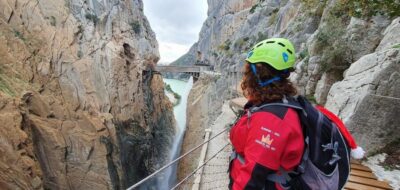 ★ 4.8Caminito del Rey Guided Tour with TransportationFrom $6912,183 reviews
 ★ 4.7From Málaga & Costa del Sol: Caminito del Rey Guided TourFrom $677,488 reviews
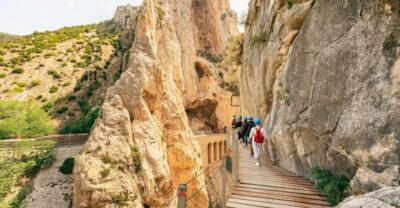 ★ 4.7El Chorro: Caminito del Rey Guided Tour with Shuttle BusFrom $447,091 reviews
 ★ 4.8Alcazaba and Roman Theatre Guided Tour With EntryFrom $145,792 reviews
 ★ 4.4Benalmadena: Dolphin Watching Boat TourFrom $225,786 reviews
 ★ 4.4Gibraltar TourFrom $384,483 reviews
 ★ 4.8Caminito del Rey Day Trip & Guided TourFrom $743,117 reviews
 ★ 4.5Ronda and Setenil Guided Tour Day TripFrom $653,072 reviews