REVIEW · CITY TOURS
Malaga Shore Excursion: City Sightseeing Malaga Hop-On Hop-Off Bus Tour
Malaga clicks into place from the bus. This City Sightseeing hop-on hop-off tour gives you a smart way to see top sights fast, with English onboard audio on an open-top, double-decker. I like that you can sit, watch the coast slide by, and let the commentary do the first pass of the city.
I also love the practical value for cruise days: the bus routes are timed to get you near the action, and your pass works for a full 24-hour window from first use. Even better, the package includes entry to Museo Interactivo de la Musica plus Museo Carmen Thyssen, and a guided walking tour that fills in the story behind the landmarks.
My main caution is real-world comfort. On busy days, you may run into crowding, and audio/headsets can be inconsistent, so I’d check that you can hear your narration before you settle in.
Key highlights you’ll feel in the moment

- Cruise-port friendly stops keep you from wasting time crossing town
- Three routes let you pick parks, beaches, museums, and the hilltop views
- Recorded English commentary helps you understand what you’re seeing
- Included museum time can make the bus ticket feel like more than just transport
- Some route variety has tradeoffs, like the Green route being audio-free
More of the city, from the port up to Gibralfaro
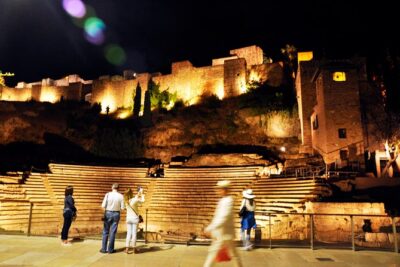
- Málaga: Alcazaba and Roman Theatre Guided Tour With Entry★ 4.8 · 5,792 reviews
- From Malaga and Costa del Sol: Gibraltar Tour★ 4.4 · 4,483 reviews
- Malaga: Teatro Flamenco Malaga Live Flamenco Show★ 4.7 · 4,254 reviews
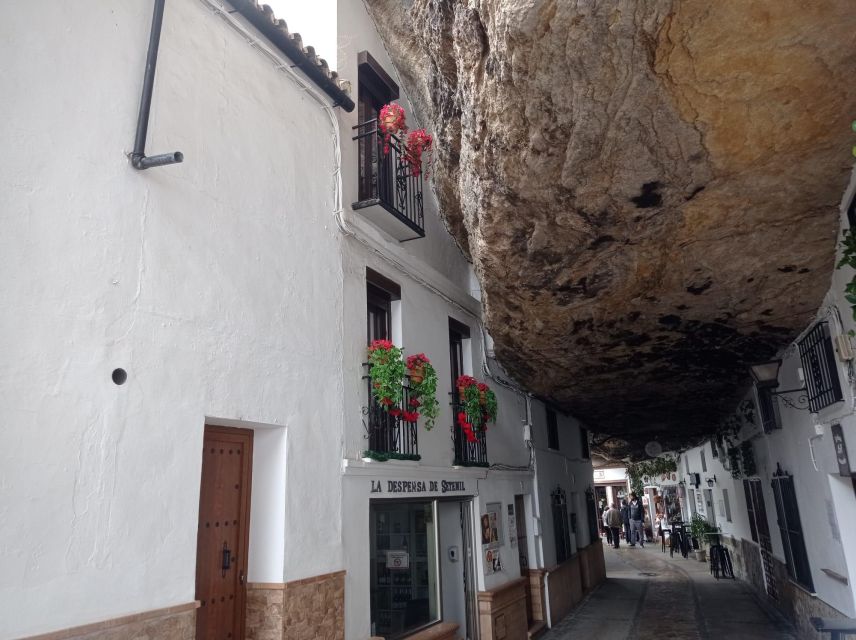
- From Málaga: Ronda+Setenil de las Bodegas with Little Train★ 4.6 · 4,115 reviews
Cruise-day strategy: why the port-near stops matter in Malaga

If you’re docking in Malaga, the clock is always tight. This tour is built for that reality. The bus stops are about a 10-minute walk from the cruise port, and you control when you return to the ship using the hop-on hop-off rhythm.
I like that you do not have to commit to one exact plan up front. You can start with the Red route to get your bearings, then hop off for a specific stop like the cathedral area or Gibralfaro, and hop back on when you’re ready. That flexibility is what makes a hop-on hop-off work when you have limited shore time.
One detail that really helps: Stop 7, La Farola, is the closest stop to the port. That means if you find yourself behind schedule, you can usually fix it without scrambling across the city. It’s also a good place to regroup because it sits right by the seaside promenade.
Price and what you truly get from a $32.44 pass

At about $32.44 per person, you’re paying for transportation, narration, and a chance to build a personalized itinerary in one day. On its own, a bus pass can feel like a convenience buy. Here, the included extras make it more than that.
You get entry to Museo Interactivo de la Musica and Museo Carmen Thyssen with your pass. Depending on your interests, that can offset a big chunk of the ticket price versus paying for museums separately. Add the guided walking tour, and you get both a moving overview and a focused chunk of the old center.
The walking tour is anchored around classic Malaga sights and viewpoints, including stops that connect to Picasso, the Roman-era Teatro Romano, and the Alcazaba area. Even if you never join the walk, the bus still gives you a strong framework: you see where everything is, then you choose what to follow up on foot.
Routes in plain terms: Red loop, Green minibus, Blue quick run
Think of this tour as three different flavors of Malaga, sharing some common hotspots.
More ways round the city in half a day
Red Route: your main “see it all” loop
The Red route runs from 10:00 AM to 6:00 PM, with the first departure from Stop 1 at 10:00 AM and the last at 6:00 PM. A full loop takes about 80 minutes, and buses typically come every 30 minutes. This is the one you’ll likely use most, especially for cruise timing and the most complete set of major stops.
Green Route: local mini-bus, fewer bells and whistles
The Green route runs from 11:15 AM to 5:00 PM (and on Saturdays, Sundays, and holidays the last departure is 7:10 PM). A full loop is about 60 minutes, with departures roughly every 75 minutes. Important tradeoff: the Green route is served by a minibus without audio commentary, and it runs as a public line, so it feels less like a narrated sightseeing ride and more like practical transport to specific areas.
If your priority is the Botanical Gardens (Jardin Botánico), this is the route that makes sense. If you hate unplanned waiting, I’d keep an eye on timing because the frequency is not as tight as the Red route.
Blue Route: a short window for specific highlights
The Blue route runs from about 11:50 AM to 2:00 PM, with roughly a 60-minute loop and departures around every 50 minutes. You’ll likely use Blue as a connector rather than your whole day plan, since the time window is narrow.
Onboard audio, headsets, and how not to miss your stop

The tour’s biggest “background work” is the recorded narration, and it’s designed to be in English. In theory, you listen, glance at the landmarks, and then hop off when a stop matches your interests.
In practice, I’d be proactive. On crowded buses, you can end up with a seat where audio is harder to catch, and there have been cases where the sound experience was not consistent. Before you zone out, check that your headset works. If you notice it’s faint or delayed, move or switch seats early.
Also, some commentary can run a little late if the bus is stuck at longer stops. The solution is simple, don’t wait for the perfect moment to plan your next hop. If you see the bus nearing a stop you care about, start prepping to disembark rather than listening for the last sentence of the narration.
Your stop map: from the marina to La Manquita and up to Gibralfaro

I’d build your day around the Red route because it strings together the most “first-time Malaga” hits. Below is how I’d think about each stop and what makes it worth your time, plus the main drawback to watch for.
Stop 1: Vialia, Renfe
This is your transport hub start point. It’s useful as a re-entry point when you want to reset after walking around the center. The drawback is that it’s not as scenic as the sea-front stops, so treat it like a launchpad.
Stop 2: CAC Málaga (Centro de Arte Contemporáneo)
CAC Málaga is for art lovers, especially if you like contemporary design rather than only historic old-town scenes. It’s a good mid-route hop if you want a break from sun and viewpoints. The drawback is it may not be your top priority if you only have one short shore window.
Stop 3: Puerto (Estación Marítima area)
This is both a key point on the route and the meeting area for the guided walking tour. If you plan to take the walk, this stop is your anchor. The main downside is that cruise-port areas can get busy, so allow a little buffer if you’re joining any timed activity.
Stop 4: Paseo del Parque, Plaza de la Marina
This is classic “start exploring on foot” territory. Plaza de la Marina puts you close to the marina vibe and the central pedestrian streets. The drawback is that it can be crowded when many cruise passengers are out at once.
Stop 5: Parque (Paseo del Parque)
This stop ties you into the leafy, park-like parts of Malaga. It’s a nice option if you want shade and a calmer pace than the most intense shopping streets. The drawback is that it’s more about strolling than about one single must-see building.
Stop 6: Centre Pompidou Málaga
If you’re a modern art fan, this is one of the strongest reasons to ride the route again. The stop is well-positioned for a museum visit when you want air-conditioned time. The drawback is that museum time can eat into your hop-on hop-off flexibility if you don’t plan your return to the ship.
Stop 7: IGY Málaga Marina, Paseo de la Farola
This is the “sea view and lighthouse area” stop, and it’s also the closest stop to the port. Use it if you want beach air without committing to the full castle climb. The drawback is that it’s tempting to linger here, so keep an eye on your return time.
Stop 8: Playa de la Malagueta
This is your quick beach hop. If the weather is good, you can turn it into a relaxed break before heading back to the historic core. The drawback is that beach time can silently expand, which is risky when you must be back at the ship.
Stop 9: Palacio de Miramar
This stop is about viewpoint energy and elegant surroundings. Even if you do not spend long here, you can use it to reset your legs and get a different angle on Malaga. The drawback is that it can feel like more of a pause than a “stand here for hours” destination.
Stop 10: Plaza de Toros
The bullring area gives you a sense of Malaga’s civic landmarks and architecture. Even an exterior look can help you connect the city’s public spaces with the rest of your sightseeing. The drawback is that it’s not the strongest stop if you want only art, beach, and old churches.
Stop 11: Castillo (Gibralfaro) area
This is where the city rises. Gibralfaro Castle rewards you with big views over the water and rooftops. The drawback is the combination of lines and heat. On busier days, expect waiting, especially if you’re trying to do it during peak hours.
Stop 12: Basilica de Santa María de la Victoria (La Manquita)
This is the stop for the famous “one-armed lady,” La Manquita. If you want to understand why locals talk about this cathedral silhouette, this is your best hop. The drawback is that church-zone timing and foot traffic can slow you down if you’re in a hurry.
Stop 13: Museo Carmen Thyssen and Cathedral area (plus Plaza de la Merced)
This stop is a two-for-one moment: museum time and the cathedral neighborhood feel close together. It’s also a key point tied to Picasso-related walking routes, so it’s easy to connect bus sightseeing with foot sightseeing. The drawback is that you can easily over-plan yourself here, so pick either “museum deep focus” or “quick look plus photos.”
Stop 14: Avenida de Andalucía
This is more of a corridor stop than a “one big attraction” stop. It can help you reposition quickly if you’re moving toward the next part of the day. The drawback is that it may not feel as meaningful as the landmark stops.
Botanical Gardens and the Green route stops that feel more local

Now let’s talk about the Green route. If Red is for highlights, Green is for specific areas and a more “getting there” feel.
Stop 1 is Estación de Autobuses in Plaza de la Solidaridad. Think of it as a transit anchor. Stop 2 brings you back to Vialia – Renfe, which can help you rejoin the rhythm if you’re hopping back into town.
The next stretch includes Callejones del Perchel (Stop 3) and Pasillo Santa Isabel (Stop 4). These are the kinds of streets where you see how Malaga lives when you step outside the postcard loops. The drawback is that they’re not always “museum stops,” so you’ll want comfortable shoes if you plan to wander.
Stop 5: Calle Pintor Bermudez Gil near Cruz Roja, and Stop 6: San José at Parque de la Alegria. These keep you close to more neighborhood-scale spaces and greens. The downside is that you may spend time finding your way if you’re expecting big, obvious monuments at every stop.
Then comes the big reason to use Green: the botanical area. Stops 7 and 9 are Camino de Casa Bermeja, and Stop 8 is MA-431, Jardin Botánico. This is the part of the route where you can turn the bus into a calm, scenic visit. The drawback is that the frequency is lower, so you have to respect return times instead of assuming another bus will show up fast.
After that, Stop 10 is Avda. de la Palmilla – Campo de Futbol near Estadio de Futbol, then Stop 11: P.º Martiricos, 10. Stop 12: Santo Domingo – Perchel at Guimbarda, and Stop 13: C. Cuarteles, 3 for Cercanias. These are useful for navigation, but they’re not the main “tourist spectacle” stops. Use them if you’re pairing the bus with other plans nearby.
Blue route: a tight timing window to connect museums and the center

The Blue route is short and time-bound, which makes it good for a half-decision day. Stop 1 starts back at Vialia.
Stop 2: Russian and Automobile Museums. If you like unusual museum topics, this is your direct shot. The drawback is that it’s a narrow time run, so if you miss it you might lose the connection.
Stop 3 again hits Puerto, which can be handy if you’re starting from the port area. Stop 4: Centre Pompidou Málaga gives you a chance to layer in contemporary art. Stop 5: the Calle Larios area via the Arturo Reyes statue point helps link you with the iconic main shopping street feeling.
The guided walking tour: where the story gets teeth

The package includes a guided walking tour, meeting at Stop 3 on the Red route (Puerto). This is where the city’s names, buildings, and neighborhoods turn from labels into context.
The walk includes points that connect the dots between Malaga’s arts and old city fabric. You’ll pass by or focus on Plaza de la Marina, C/ Marques de Larios, and C/ Salinas, then head toward Plaza del Obispo and the north façade of the cathedral. You also get tied-in moments for Museo Picasso Malaga and Bodega El Pimpi.
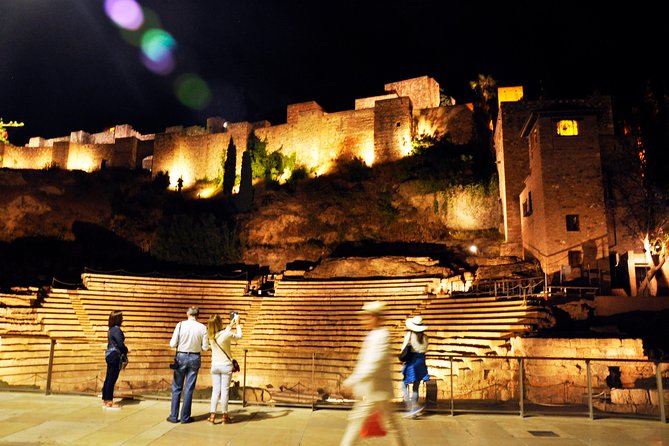
The itinerary then reaches into the older layers with Teatro Romano and the Alcazaba area. It finishes with more central landmarks like Plaza de la Aduana, Rectorado de la Universidad de Malaga, and Banco de España.
This is valuable because it helps you avoid the usual hop-on hop-off trap, where you see a lot of stuff but don’t know why it matters. The walking guide can also make the museum choices easier, since you’ll understand what to prioritize.
What museums fit best with your bus hops
This tour includes entry to Museo Interactivo de la Musica and Museo Carmen Thyssen. I’d use the included tickets when you can match them to your energy level.
Museo Carmen Thyssen makes sense for a “short, planned” stop near the cathedral area, since it fits well with Red route timing. Museo Interactivo de la Musica can be a smart weather plan too, especially if the sun is relentless or the day turns rainy. Even if you do not do both, the included option is a nice hedge.
For big sights like Gibralfaro, use the bus as the route driver, then plan the walk from there carefully. The payoff is the views, but lines and heat can stretch your time. That’s why I like building in a backup return point such as La Farola so you’re not stuck.
When I think you should skip, and when it’s a win
I’d treat this tour as a win if you:
- Want a fast orientation for your first day in Malaga
- Are pairing bus sightseeing with Picasso-related stops and museum visits
- Have a cruise schedule and need a practical way to control your return time
I would consider skipping or switching strategies if you:
- Hate crowds and you are traveling during peak cruise days
- Depend on audio being perfect, since it can be inconsistent on some buses
- Want to minimize waiting at every major stop like Gibralfaro
A fun rule of thumb: if you’re only doing Malaga for a couple of hours, this bus can get you “90 percent of the way there.” If you love one specific museum or one big viewpoint, use the bus to get to it, then slow down on foot for the part you care about most.
Should you book City Sightseeing Malaga?
Book it if your goal is a stress-light city overview with real flexibility. The cruise-port proximity, hop-on hop-off format, and included museum entries make the price easier to justify than a basic bus-only ticket.
Skip it if your plan is very narrow and you’re comfortable going straight to one or two places by taxi or on foot. On crowded days, you may lose time to boarding lines and you could feel stuck deciding whether to get off or wait for the next bus.
If you do book, plan your day with one anchor stop you care about most, then use the rest of the route as your menu. That approach keeps the bus from feeling like a chore and turns it into exactly what it’s designed to be: your Malaga starter kit.
FAQ
How long is the full loop on the Red route?
The Red route takes about 80 minutes for a full loop, with departures about every 30 minutes.
How often do buses run, and what are the main operating hours?
The tour runs daily from 10:00 AM to 6:00 PM. The Red route starts at 10:00 AM and ends at 6:00 PM, with the Green and Blue routes operating within their own specific time windows.
How long is my hop-on hop-off pass valid?
Your pass is valid for 24 hours from the time you first use it.
Is there English narration on the bus?
The tour offers recorded audio commentary in English.
Does the Green route have audio commentary?
No. The Green route is served by a minibus without audio commentary, and it operates on a public line.
What attractions are included with the tour?
The package includes entry to Museo Interactivo de la Musica and Museo Carmen Thyssen, plus a guided walking tour.
Where is the closest stop to the cruise port?
Stop 7, La Farola, is the closest stop to the port, though you can join at any stop along the route.
More Tours in Malaga
More Tour Reviews in Malaga
Malaga, Three More Ways
Fresh on the Malaga list
City Tours, compared.
★ 4.0City Sightseeing Hop-On Hop-Off Bus TourFrom $322,619 reviews
★ 4.9Private City Tour by Eco Tuk TukFrom $281,319 reviews
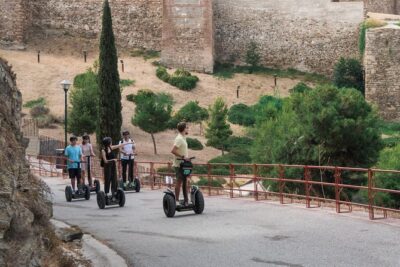
★ 5.0Malaga City Tour 2 Hours Monumental Segway TourFrom $66896 reviews
★ 5.0Caminito del Rey with Pickup from Malaga CityFrom $71729 reviews
★ 3.0City Sightseeing Malaga Hop-On Hop-Off Bus TourFrom $32647 reviews
★ 5.0Rent a City Bike: Full Day 24 hoursFrom $21509 reviews
★ 3.5Benalmadena: City Sightseeing Hop-On Hop-Off Bus TourFrom $17379 reviews
★ 5.0Mijas: Panoramic city tour in an electric Tuk TukFrom $38329 reviews
Browse the lists this tour appears in